



What Causes Basement Flooding? 9 Reasons a Basement Floods
Basement flooding is most commonly caused by poor drainage, hydrostatic pressure, foundation cracks, clogged gutters, sump pump failures, sewer backups, heavy rainfall, window well leaks, and plumbing failures. According to the 2023 American Housing Survey, roughly 2.8 million U.S. homes reported water entering through the basement in a single year, demonstrating how widespread basement flooding and water intrusion can be. In many cases, multiple issues combine to allow water to enter the basement. Understanding these causes can help homeowners prevent costly water damage and identify problems before a flood occurs.
Quick Answer: The 9 Most Common Causes of Basement Flooding
- Poor exterior drainage around the foundation
- Hydrostatic pressure from groundwater
- Clogged or damaged gutters and downspouts
- Sump pump failure or power loss
- Foundation cracks and structural movement
- Sewer or drain backups
- Heavy rainfall or flash flooding
- Window wells and below-grade entry points
- Faulty plumbing or appliance leaks
Understanding Basement Flooding: Why It Happens More Often Than Homeowners Expect
Many homeowners assume basement flooding only occurs during hurricanes or major floods. In reality, water intrusion often develops because of drainage issues, aging infrastructure, or foundation vulnerabilities that worsen over time.
Even small cracks in concrete can allow groundwater to seep inside when hydrostatic pressure builds around the foundation. Combined with clogged gutters, improper grading, or failed sump pumps, these minor issues can quickly escalate into significant water damage during heavy rainfall. Professional restoration specialists frequently find that basement floods result from several contributing factors rather than a single failure.
What Causes Basement Flooding? The 9 Common Causes of Basement Floods
Basement flooding rarely happens because of a single issue. In most cases, it results from a combination of water pressure, drainage failures, structural vulnerabilities, or severe weather conditions. Understanding the most common causes can help homeowners identify warning signs early and take preventive action before minor moisture problems become major flood damage.
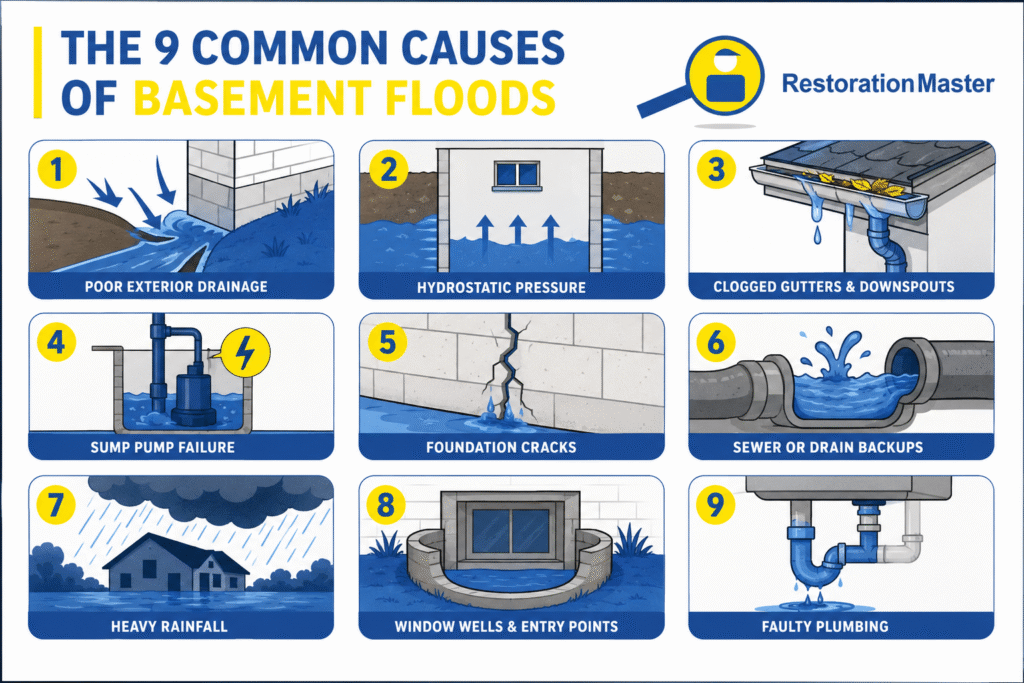
1. Poor Exterior Drainage Around the Foundation
Improper grading is one of the leading causes of basement flooding. When landscaping slopes toward the home instead of away from it, rainwater pools around the foundation and increases pressure against the basement walls. Over time, saturated soil forces moisture through tiny openings and weak points in the foundation.
How to reduce the risk:
- Regrade landscaping to slope away from the house
- Fill low spots where water collects
- Improve surface drainage around the property
2. Hydrostatic Pressure from Groundwater
Hydrostatic pressure occurs when groundwater accumulates around the foundation. As pressure builds, water pushes through porous concrete, construction joints, floor-wall seams, and microscopic cracks. Many homeowners notice water seeping through basement walls or floors after prolonged rain because of hydrostatic pressure.
Preventive measures include:
- Exterior waterproofing
- French drains or drain tile systems
- Foundation drainage improvements
- Proper yard grading
3. Clogged or Damaged Gutters and Downspouts
Gutters are designed to direct rainwater away from your home. When clogged with leaves and debris, they overflow near the foundation, saturating the surrounding soil. Downspouts that discharge too close to the house can create the same problem.
Best practices:
- Clean gutters at least twice per year
- Inspect for damage after storms
- Extend downspouts 6 to 10 feet from the foundation
4. Sump Pump Failure or Power Loss
A sump pump serves as a critical defense against basement flooding by removing groundwater before it accumulates. Unfortunately, storms often cause power outages precisely when pumps are needed most. Mechanical failures, clogged discharge lines, aging components, or lack of maintenance can also leave homeowners vulnerable. Installing a battery backup system and testing the pump regularly helps reduce this risk.
5. Foundation Cracks and Structural Shifts
Concrete naturally expands, contracts, and settles over time. Seasonal moisture changes and soil movement can create cracks that allow groundwater to enter. Even hairline cracks should be monitored because repeated freeze-thaw cycles and ongoing settlement may enlarge them.
Signs include:
- Wall cracks
- Floor cracks
- Bowing basement walls
- Water stains near cracks
6. Sewer or Drain Backups
Municipal sewer systems can become overwhelmed during heavy rain, forcing wastewater back through basement drains. Tree root intrusion, damaged sewer lines, and blockages can also reverse normal flow and introduce contaminated water into the home. Because sewage contains bacteria and other hazardous contaminants, professional cleanup is strongly recommended.
7. Heavy Rainfall or Flash Flooding Events
When storms produce rainfall faster than the ground or drainage infrastructure can absorb it, excess water seeks alternate pathways into homes.
Water commonly enters through:
- Foundation cracks
- Basement windows
- Stairwells
- Exterior doors
- Window wells
- Floor-wall joints
Homes located in low-lying areas or near flood-prone zones face an even greater risk.
8. Window Wells and Basement Entry Points
Poorly maintained window wells can quickly fill with water during storms. If drains become clogged or protective covers are missing, water may spill directly into the basement. Regularly clearing debris and ensuring proper drainage can significantly reduce this vulnerability.
9. Faulty Plumbing Inside the Home
Not all basement floods originate outdoors. Burst pipes, leaking water heaters, washing machine hose failures, HVAC condensate drain problems, and overflowing fixtures can release substantial amounts of water inside the home. Routine inspections help identify aging components before catastrophic failures occur.
Why Does My Basement Flood After Heavy Rain?
Many homeowners notice flooding only after storms. This often happens because rainfall saturates the surrounding soil, increasing hydrostatic pressure while overwhelming drainage systems. Combined with clogged gutters, poor grading, or foundation cracks, water is forced into the basement through available openings.
If your basement consistently floods after rain, addressing the underlying drainage issue is essential rather than repeatedly cleaning up the damage.
Basement Flooding Causes at a Glance
| Cause | Why It Happens | Prevention Tip |
|---|---|---|
| Poor Exterior Drainage | Water collects around the foundation due to improper grading. | Ensure the ground slopes away from your home. |
| Hydrostatic Pressure | Groundwater builds up and pushes through walls or floors. | Install waterproofing and drainage systems. |
| Clogged Gutters & Downspouts | Overflowing rainwater saturates the soil near the foundation. | Clean gutters and extend downspouts away from the house. |
| Sump Pump Failure | A broken pump or power outage prevents water removal. | Test the pump regularly and add a battery backup. |
| Foundation Cracks | Water enters through cracks caused by settling or movement. | Inspect and seal cracks before they worsen. |
| Sewer Backup | Blocked or overloaded sewer lines force wastewater into the basement. | Maintain sewer lines and install a backwater valve. |
| Heavy Rain or Flash Flooding | Storms overwhelm drainage systems and saturate the surrounding soil. | Improve drainage and waterproof vulnerable areas. |
| Window Wells | Blocked drains or poor sealing allow rainwater inside. | Keep wells clear and use protective covers. |
| Plumbing Leaks | Burst pipes or leaking appliances flood the basement from within. | Inspect plumbing and replace aging hoses and fixtures. |
Early Warning Signs Your Basement Is at Risk
Basement flooding often develops gradually before becoming a visible problem. Moisture can enter through tiny foundation cracks, poor drainage, or hidden leaks long before standing water appears. Paying attention to early warning signs allows homeowners to address small issues before they turn into costly flood damage, mold growth, or structural concerns.
Common warning signs that your basement may be at risk of flooding include:
- Musty or damp odors: Persistent earthy smells often indicate excess moisture, hidden water intrusion, or early mold growth.
- White powder on basement walls (efflorescence): This chalky residue forms when water moves through concrete or masonry and leaves behind mineral deposits.
- Higher indoor humidity levels: A basement that feels unusually humid or sticky may have excess moisture entering from outside.
- Damp spots or water stains on lower walls: Discoloration or wet areas near the floor can signal foundation seepage.
- Peeling paint or bubbling drywall: Moisture trapped behind finished surfaces can cause materials to separate and deteriorate.
- Cracks in foundation walls or flooring: Even small cracks can become pathways for groundwater intrusion over time.
- Pooling water near the foundation after rain: Standing water outside the home often increases pressure against basement walls.
- A sump pump that runs continuously—or not at all: Constant operation may indicate excessive groundwater, while failure to activate can signal mechanical or electrical issues.
- Rust, corrosion, or water marks around appliances and pipes: These signs may point to slow plumbing leaks or ongoing moisture problems.
If you notice one or more of these warning signs, addressing the underlying cause early can help prevent extensive basement flooding and reduce the likelihood of costly repairs.
What Happens When Basement Flooding Is Ignored
Basement flooding is more than an inconvenience; it can lead to serious and increasingly expensive problems when left untreated. According to Nationwide, 1 inch of floodwater can cause approximately $25,000 in damage to an average home, making prompt mitigation essential.
Even minor water intrusion can spread quickly through porous building materials and create conditions for long-term structural damage and unhealthy indoor air quality. Because moisture often remains hidden behind walls, under flooring, and inside insulation, the full extent of the damage may not become visible until repairs are more extensive and costly.
One of the biggest concerns is timing. Water damage begins immediately, and conditions that support mold growth can develop within 24 to 48 hours. The longer moisture remains, the greater the impact on your home’s structure, systems, and indoor environment.
Potential consequences of ignoring basement flooding include:
- Mold and mildew growth: Damp conditions allow mold to spread quickly across drywall, wood, carpeting, insulation, and stored belongings.
- Foundation deterioration and structural damage: Repeated water exposure can weaken concrete, widen existing cracks, and reduce the stability of foundation materials over time.
- Damage to HVAC and mechanical systems: Furnaces, water heaters, electrical panels, and HVAC equipment located in basements can suffer corrosion, malfunction, or complete failure.
- Electrical hazards and increased fire risk: Water exposure near outlets, wiring, appliances, and electrical systems creates dangerous conditions and potential fire hazards.
- Contaminated water exposure: Floodwater may contain sewage, bacteria, chemicals, and other contaminants that can affect indoor air quality and create health concerns.
- Destroyed flooring, walls, and personal belongings: Water can ruin finished basements, furniture, electronics, documents, and sentimental items.
- Pest activity: Moist environments attract insects and other pests that thrive in damp conditions.
- Higher restoration and repair costs: Damage becomes more extensive and expensive the longer water remains untreated.
- Insurance claim complications: Delays in documenting and addressing the flooding may affect coverage, claim approval, or reimbursement, depending on the policy.
Acting quickly after basement flooding can limit the extent of the damage, improve the chances of saving materials and belongings, and reduce the overall cost and disruption of restoration.
Immediate Steps to Take If Your Basement Floods
If you discover standing water:
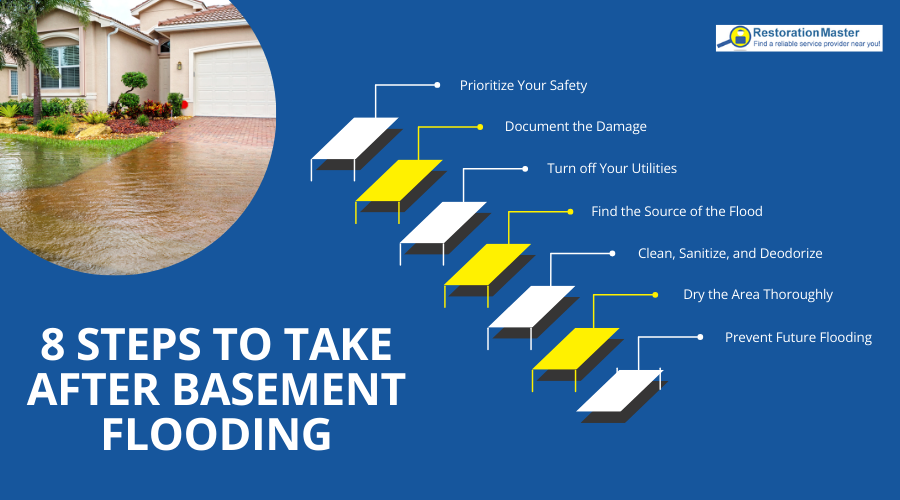
- Put safety first and avoid entering if electrical hazards exist.
- Shut off electricity if it is safe to do so.
- Stop the source of water whenever possible.
- Wear protective gear when entering flooded areas.
- Document damage with photos and videos.
- Move salvageable belongings to dry areas.
- Begin drying the space when safe.
- Contact your insurance provider promptly.
- Call a professional water damage restoration company for extraction, drying, and repairs.
Quick action after basement flooding can minimize structural damage, reduce the risk of mold development, and help restore your home more efficiently.
Basement Flood Prevention Checklist (Proactive Protection)
You can lower your flood risk by:
- Cleaning gutters twice each year
- Extending downspouts at least 6 to 10 feet from the house
- Maintaining proper grading around the foundation
- Inspecting and sealing foundation cracks
- Installing French drains or waterproofing systems where appropriate
- Adding a battery backup for the sump pump
- Testing the sump pump before storm season
- Installing water leak alarms
- Keeping window wells clean
- Inspecting plumbing and appliances regularly
- Storing valuables off the basement floor
- Scheduling periodic waterproofing inspections
Routine maintenance is almost always less expensive than flood restoration.
Does Homeowners Insurance Cover Basement Flooding?
Coverage depends on the source of the water. Many homeowners’ insurance policies cover sudden and accidental events such as burst pipes, but exclude groundwater intrusion or natural flooding unless additional endorsements or separate flood insurance policies are in place. Sewer backups and sump pump failures may require optional riders depending on your policy.
After flooding:
- Photograph all damage
- Record videos before cleanup
- Preserve damaged materials when possible
- Keep receipts for emergency expenses
- Notify your insurance company promptly
Professional restoration documentation can also support the claims process.
Get Professional Basement Water Damage Help
Basement flooding rarely happens without warning. Whether the cause is poor drainage, foundation cracks, sump pump failure, plumbing issues, or severe weather, recognizing the risks and acting early can help prevent extensive damage and expensive repairs. Even when flooding cannot be avoided, a fast response can reduce structural damage, limit mold growth, and improve the restoration outcome.
If your basement has already flooded, time matters. Water can quickly spread into flooring, drywall, insulation, and structural materials while creating conditions for mold growth in as little as 24 to 48 hours. Professional water extraction, drying, cleaning, and restoration help ensure hidden moisture does not continue causing damage long after the visible water is gone.
When you need expert help, call RestorationMaster to connect with a trusted flood damage restoration professional near you. Our network of experienced restoration companies provides basement flood cleanup, water extraction, structural drying, and water damage restoration services to help return your home to its pre-loss condition as quickly as possible.
Frequently Asked Questions
What is the most common cause of basement flooding?
Poor drainage around the home’s foundation and hydrostatic pressure are among the most common causes, especially during prolonged rainfall.
Why does my basement flood only when it rains?
Rain saturates the surrounding soil, increasing pressure against foundation walls while exposing weaknesses such as cracks, clogged gutters, or poor grading.
Can hydrostatic pressure cause basement leaks?
Yes. Hydrostatic pressure can force groundwater through porous concrete, expansion joints, and foundation cracks.
Can a finished basement be restored after flooding?
Often, yes. However, materials such as drywall, insulation, carpeting, and flooring may require removal if water damage is extensive or contaminated.
Is basement flooding dangerous?
It can be. Floodwater may contain electrical hazards, sewage contamination, bacteria, chemicals, or mold that create safety and health risks.

About Ryan Mason
An expert in the disaster restoration industry, Ryan began his career at the age of 15, responding to flood, hurricane, and other natural disaster events across the United States. He is the co-owner of a local restoration company since 2001 and has delivered restoration and specialty cleaning services to thousands of residential and commercial clients. His work has included supporting major cleanup efforts such as water damage remediation at the Boston Public Library following a water-main break and restoration-related response efforts at the Pentagon after the 9/11 attacks. Ryan is certified with the Professional Mold Inspection Institute to conduct air quality testing and holds multiple IICRC certifications, including ASD, WRT, FSRT, AMRT, and OCT, along with ANMAR and HAZWOPER certifications.