What Should You Do Immediately After a Flood?
Experiencing a flood can be overwhelming and stressful for any homeowner. When large amounts of water enter your property, it often leads to an extensive and costly repair process. From structural damage to ruined belongings, the aftermath of flooding can take weeks or even months to fully address. Cleaning and restoring a home or business after a flood is not only time-consuming but also requires careful attention to safety and proper procedures.
Being prepared can help minimize damage, protect your family, and make the recovery process more manageable. This guide walks you through immediate actions, practical cleanup tips, and professional water restoration advice to ensure your home returns to a safe, livable condition.
If you’re dealing specifically with the recent Texas flash floods, this Texas Flash Flood Help guide provides detailed steps, safety tips, and resources tailored to Texas homeowners to assist with cleanup and recovery.
Immediate Flood Action Checklist
Before diving into the detailed guide, here’s a quick snapshot of what to do immediately after a flood:
- Ensure it is safe to return home.
- Shut off electricity, gas, and water.
- Document all damage with photos and videos.
- Contact your insurance provider immediately.
- Remove water-damaged belongings and begin drying out the home.
- Wear proper personal protective equipment (PPE) at all times.
- Seek professional help for extensive water damage or structural concerns.
What Should I Do If My Home Floods?
Once it is safe to return to your home, your first priority is to assess the extent of the damage. Take photos or videos for documentation, as this will be important for insurance claims. Begin drying out your home quickly to prevent further damage and reduce the risk of mold growth.
- Ensure it is safe to return: Wait for local authorities to issue an all-clear before heading back. Floodwater can weaken structures and hide hazards.
- Shut off power, gas, and water: Check the structural integrity before entering. If the floodwater reached electrical outlets, call a licensed electrician.
- Document all damage: Most standard homeowners’ insurance policies do not cover flood damage, but private flood insurance typically does. Keep records for all expenses and damaged items.
- Ask for help when needed: Flood cleanup can be physically and emotionally overwhelming. Seek assistance from volunteer organizations, neighbors, friends, or professional contractors specializing in flood restoration.
Common Flood Hazards and How to Stay Safe
| Flood Hazard | Why It’s Risky | What You Can Do Right Away |
|---|---|---|
| Dirty water | Can carry bacteria, sewage, and chemicals | Wear gloves, boots, and a mask. Try not to touch it directly. |
| Electrical issues | Water + electricity = serious danger | Turn off the power at the main breaker. Don’t touch outlets or appliances. |
| Weak floors or walls | Surfaces may have been damaged or softened | Look carefully before stepping in. If it feels unsafe, wait for a pro. |
| Mold starting to grow | Mold can appear in just a day or two | Remove wet items fast and keep the air moving. |
| Hidden debris | Nails, glass, or sharp objects might be under water | Use a broom or stick to check first, and wear sturdy shoes. |
| Gas leaks | Flooding can bend or break gas lines | Turn off the gas and call your utility company if you smell anything unusual. |
Timeline: What to Do After a Flood
First 24 Hours
- Ensure the area is safe.
- Document all visible damage.
- Remove standing water with a shop vac if safe to do so.
- Contact your insurance provider.
24–72 Hours
- Begin removing water-damaged furniture, drywall, insulation, and flooring.
- Use fans and open windows to increase ventilation.
- Wear personal protective equipment (rubber boots, gloves, N95 mask).
First Week
- Disinfect all hard surfaces with a bleach solution.
- Check hidden spaces: cabinets, drawers, and behind appliances.
- Salvage any personal documents or photos that can be safely dried.
- Start planning restoration work with licensed contractors.
Beyond Week One
- Continue drying and ventilating the home; full drying can take 2–4 weeks.
- Monitor for mold growth and structural issues.
- Begin professional rebuilding and repairs once your home is fully stabilized.
- If you see mold, read our guide on how to clean mold after a flood.
Tips to Start Cleaning Up After a Flood
Flood recovery is rarely quick, it takes time, patience, and the right approach. Once the immediate danger has passed and it is safe to return, your focus should shift to stabilizing your home and beginning the cleanup process. This includes gathering the proper equipment, ensuring your home is structurally secure, and removing items that have been damaged beyond repair. Taking these steps early not only helps prevent further damage but also makes the restoration process more manageable.
Here are some important tips to keep in mind once you’re ready to begin cleaning up after a flood:
Use Personal Protective Equipment
It is essential to wear proper protective gear while cleaning your home after a flood. Always use rubber boots, gloves, and durable clothing to minimize direct contact with contaminated surfaces. Floodwater often contains hazardous substances such as chemicals, raw sewage, and other dangerous residues that remain even after the water has receded. In addition, they may carry lead-based particles, mold spores, and other harmful contaminants. To protect your lungs, be sure to also wear an N95 mask while working in these conditions.
Remove Everything
To begin drying out your property, the first step is to remove all water-damaged items. Leaving them in place can trap moisture and allow mold spores to spread, worsening the damage. Separate and set aside any belongings that can be salvaged, such as family photos, important documents, or solid wood furniture. However, porous materials like carpet and carpet padding should always be removed and discarded, as they retain moisture and are highly susceptible to mold growth.
Demo Down to the Studs and Concrete Slab
While it may be possible to save certain sections of wood flooring after a flood, in many cases the damaged materials will need to be removed down to the concrete slab and wall studs. Water-damaged drywall should also be demolished, and most homeowners are able to handle this task themselves. As a precaution, cut the drywall at least one foot above the waterline. Although water usually wicks only a few inches above the visible line, it’s better to remove extra material to ensure no hidden moisture remains. Water can also wick into wall studs, but in most cases, solid wood two-by-fours will dry out naturally after a few days.
After removing the appropriate sections of drywall, the insulation behind it must also be cut out and discarded. Avoid yanking insulation from the wall, as this can leave gaps near the top; instead, cut it cleanly for proper removal.
Once you’ve documented the damage and submitted your insurance claim, an adjuster will eventually inspect your property. In the aftermath of large-scale disasters, however, it may take some time before an adjuster is able to visit. To protect your claim, always save a small section of wet drywall as physical evidence of the waterline for the inspection.
Don’t Forget Hidden Spaces
Be sure to thoroughly check drawers, cabinets, and other hidden areas where standing water may collect. Moisture often lingers behind cabinets or at the base of a kitchen island, where damage can go unnoticed. In many cases, cabinets made from solid plywood can be salvaged once they are properly dried. However, you will need to remove the drywall and insulation behind them while leaving the cabinet structure intact. If your cabinets are constructed from pressboard or particleboard, they are far less durable and will likely need to be replaced.
Interior doors may sometimes be saved as well. To dry them out, remove the doors from their hinges and place them outside, laying flat with space between each one to allow air circulation. Positioning fans nearby can speed up the drying process and improve the chances of preserving the doors.
Clean and Disinfect
Use a broom and a shop vac to clean all surfaces thoroughly, removing mud, debris, and standing water. For solid surfaces like studs and concrete slabs, you can rinse them with clean water to help eliminate bacteria and contaminants left behind by floodwater. To further disinfect the area, prepare a bleach solution by mixing half a cup of bleach with one gallon of water. Pour the solution into a pump spray bottle and apply it evenly to affected surfaces to help kill mold, bacteria, and other harmful microorganisms. Always wear protective gloves, goggles, and a mask when handling bleach, and ensure the area is well-ventilated.
Ventilate and Dry the Area
Once you’ve removed debris and thoroughly cleaned your home, use fans to help speed up the drying process. Keep windows and doors open whenever possible to improve air circulation and ventilation. Depending on the severity of the flooding, it can take two to four weeks for your home to fully dry before any rebuilding or restoration work can safely begin. Patience during this stage is essential to prevent mold growth and ensure your home is properly prepared for repairs.
Hire Only Credentialed Contractors
Once you begin the rebuilding process with a professional, it’s important to remain vigilant against scam contractors who may try to take shortcuts or overcharge for their services. Always verify that any contractor you hire is properly licensed and insured. Check references carefully, and if possible, visit previous projects or speak directly with satisfied customers to ensure the quality of their work. Be especially cautious about paying a large deposit upfront, establish clear payment terms and only pay for work that has been completed to your satisfaction.
What actions should I avoid after my home is flooded?
After a flood, there are several important actions you should avoid to protect yourself, your family, and your home:
- Entering unsafe areas: Avoid going into your home until authorities confirm it is safe. Floodwater can weaken structures, collapse ceilings, or hide electrical hazards.
- Touching electrical systems or appliances: Never touch electrical outlets, switches, or appliances if they have been submerged. Turn off power at the main breaker before entering.
- Ignoring protective gear: Avoid working in flooded areas without gloves, boots, and an N95 mask. Floodwater can carry bacteria, mold spores, chemicals, and sewage.
- Delaying documentation: Don’t start cleanup or disposal before documenting damage with photos and videos. Insurance claims require proof of damage.
- Using contaminated water: Avoid drinking tap water until authorities confirm it’s safe. Flooding can contaminate water lines with bacteria or chemicals.
- Ignoring mold prevention: Don’t leave wet materials like carpet, drywall, or insulation in place. Moisture left behind encourages mold growth and can worsen damage.
- Hiring unverified contractors: Avoid rushing to hire the first contractor who offers services. Always check credentials, references, licenses, and insurance to avoid scams.
- Mixing cleaning chemicals improperly: Avoid using bleach or other cleaners together with ammonia or other products, as toxic fumes can result.
- Underestimating structural damage: Don’t attempt major repairs, like removing flooring or walls, if you’re unsure of the building’s integrity, wait for professional guidance.
What Should I Throw Away After a Flood?
Floodwater can carry bacteria, chemicals, and sewage, so it’s better to err on the side of caution. Items that can’t be fully sanitized should be thrown away to prevent mold growth and health hazards.
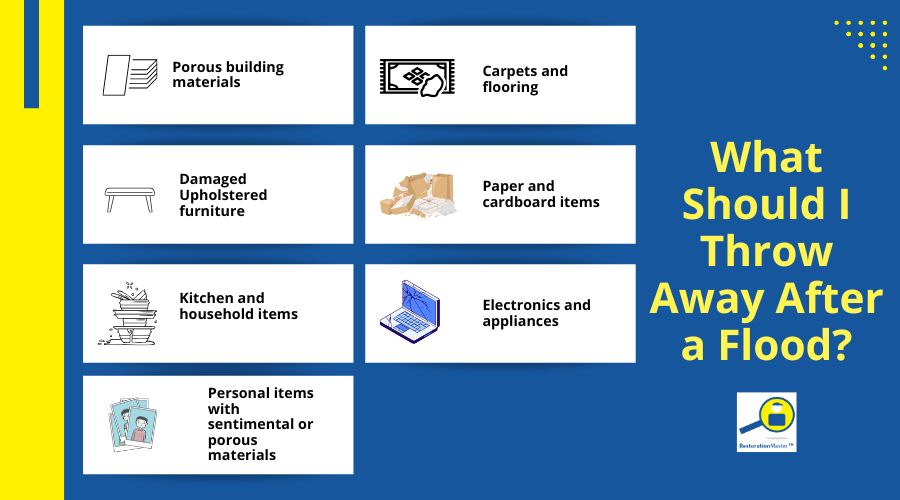
Porous building materials:
- Drywall and insulation that have absorbed water.
- Particleboard or pressboard cabinetry.
- Ceiling tiles and wallpaper backing.
Carpets and flooring:
- Wall-to-wall carpeting and carpet padding.
- Rugs that cannot be thoroughly disinfected.
- Hardwood or laminate flooring that has buckled or warped beyond repair.
- For tips on drying and salvaging flooded carpets, check out our step-by-step guide on how to dry flooded carpet.
Upholstered furniture and mattresses:
- Sofas, chairs, and mattresses soaked with floodwater, especially if contaminated with sewage.
Paper and cardboard items:
- Books, magazines, and cardboard boxes that were wet.
- Important papers should be salvaged if possible, by drying or scanning, but heavily contaminated items should be discarded.
Kitchen and household items:
- Wooden cutting boards, utensils, or bowls that absorbed water.
- Porous plastic containers, sponges, and foam items.
- Food and beverages that were submerged or exposed to floodwater.
Electronics and appliances:
- Appliances that were submerged may need professional inspection, and small electronics may be unsafe to use.
Personal items with sentimental or porous materials:
- Clothing, shoes, stuffed animals, and other textiles that were soaked and cannot be thoroughly disinfected.
Flood Facts & Statistics to Keep in Mind
- Mold can begin growing within 24–48 hours of water exposure (EPA).
- The average flood damage cost per home in the U.S. exceeds $40,000 (NFIP).
- Floods are among the most common natural disasters in the U.S., accounting for thousands of emergency calls annually.
Professional Water Damage Restoration After Flood
Recovering from a flood is stressful, but taking the right steps can protect your home and family. Focus on safety, document the damage, remove contaminated materials, and thoroughly dry and disinfect your property. Work with licensed contractors and avoid shortcuts or unsafe practices to ensure proper restoration. Being prepared and proactive will help you get your home back to a safe, livable condition as efficiently as possible.
Dealing with the aftermath of a flood can be overwhelming, and the cleanup process is often too complex to handle alone. That’s why partnering with a professional water damage restoration service is crucial. Licensed experts can quickly assess the damage, safely remove contaminated materials, thoroughly dry and disinfect your home, and guide you through repairs to prevent mold and structural issues. Don’t wait, contact a trusted water damage restoration provider today to protect your property, safeguard your family’s health, and get your home back to a safe, livable condition as quickly as possible.
Frequently Asked Questions
How do I know if my home is structurally safe after a flood?
- Wait for local authorities to declare the area safe.
- Check for visible signs of damage: sagging ceilings, warped floors, cracked walls, or foundation cracks.
- Avoid entering if there is standing water near electrical outlets or appliances.
- When in doubt, hire a licensed structural engineer or inspector before entering.
Can I turn on electricity after a flood?
- No, not until a licensed electrician inspects your home.
- Floodwater can cause hidden electrical hazards, even if outlets look dry.
- Always shut off power at the main breaker before entering.
Should I drink tap water after a flood?
- No, tap water may be contaminated with bacteria, chemicals, or sewage.
- Use bottled water or water boiled for at least one minute until authorities confirm it is safe.
- Avoid using tap water for cooking, brushing teeth, or making ice until cleared.
How long does it take to dry a house after a flood?
- Typically 2–4 weeks depending on water severity and ventilation.
- Use fans, open windows, and dehumidifiers to speed up drying.
Does homeowners insurance cover flood damage?
- Standard policies usually do not cover flooding.
- Flood insurance or FEMA-backed National Flood Insurance Program (NFIP) policies are required.
- Document all damage for claims.

About Vince Sandri
Vince Sandri is a disaster restoration content specialist with more than 12 years of experience researching, writing, and educating property owners about water damage, fire and smoke damage, mold remediation, storm damage, and other disaster recovery topics. Since 2014, he has served as the lead contributor to RestorationMaster.us, where he has developed hundreds of in-depth service pages, educational guides, and industry-focused articles for restoration professionals across the United States.
Through extensive research and ongoing collaboration with restoration contractors, Vince has built a strong foundation in the science, processes, and best practices behind property damage mitigation and recovery. His work aligns with industry standards like the IICRC and EPA guidelines, and helps homeowners, business owners, and property managers understand how disasters impact structures, what immediate steps to take, how professional restoration works, and how to prevent long-term structural and health risks.
Vince specializes in translating complex restoration procedures — including water extraction, structural drying, smoke odor removal, mold containment, and storm damage repair — into clear, actionable information that empowers readers to make informed decisions during high-stress situations. His content aligns with industry standards and focuses on safety, accuracy, and practical response strategies.
He earned his Bachelor of Arts degree from Aurora University and his master’s degree from DePaul University. Since 2012, Vince has focused on SEO-driven website content, technical service pages, and educational resources within the disaster restoration industry.
Outside of his professional work, Vince is also a musician and performs in the Chicago, IL area.