Tips for Removing Mold from Rubber
Mold can form on various surfaces when there is moisture present. Some of the materials it can affect include plastic, rubber, wood etc. It is common for mold to form on rubber surfaces throughout the home such as air conditioning or washing machine seals, coatings, and gaskets when they have too much moisture. Mold can also form on garage door rubber seals during periods of high humidity or poor drainage, especially if regular garage door maintenance is neglected.
If you notice mold on rubber within your home or business, make sure to react right away and get it removed so you can ensure it does not continue to spread and cause further damage.
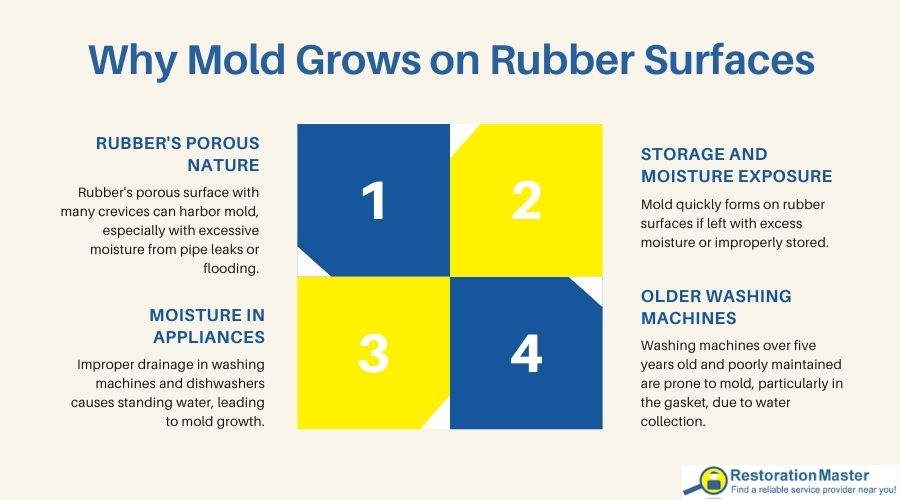
4 reasons that explain why grows on rubber surfaces of any appliances
Reasons for Mold Growth on Rubber
These are some of the reasons mold forms on rubber surfaces:
- Rubber is porous which means that it has a lot of crevices within its surface which can allow mold to hide. In the case of excessive moisture such as pipe leaks or flooding, the rubber material will eventually mold.
- When there is extra moisture in washing machines or dishwashers, it means that they are not properly draining which causes standing water that will allow for mold growth.
- Mold can quickly form on rubber surfaces if it is improperly stored or left out with excess moisture present.
- Washing machines are especially prone to mold growth if they are more than five years old and they are not properly maintained. In this case, mold will grow inside the gasket as this part of the equipment collects water which is a great environment for mold to spread around.
- This includes water infiltration from damaged garage door seals or tracks, which may require prompt garage door repair to prevent future mold and moisture issues.
Cleaning Mold from Rubber
You can clean mold from rubber surfaces yourself. However, what you use for cleaning will depend on what type of rubber your item is made of and where the damage is located (washing machine, dishwasher etc.). Please make sure to check the detailed instructions you will find in the owner’s manual before attempting to clean any rubber surfaces. Some common solutions for cleaning mold from rubber surfaces include vinegar, baking soda, detergent, or chemicals such as bleach. We will break each of these cleaning solutions down and the cleaning process for each:
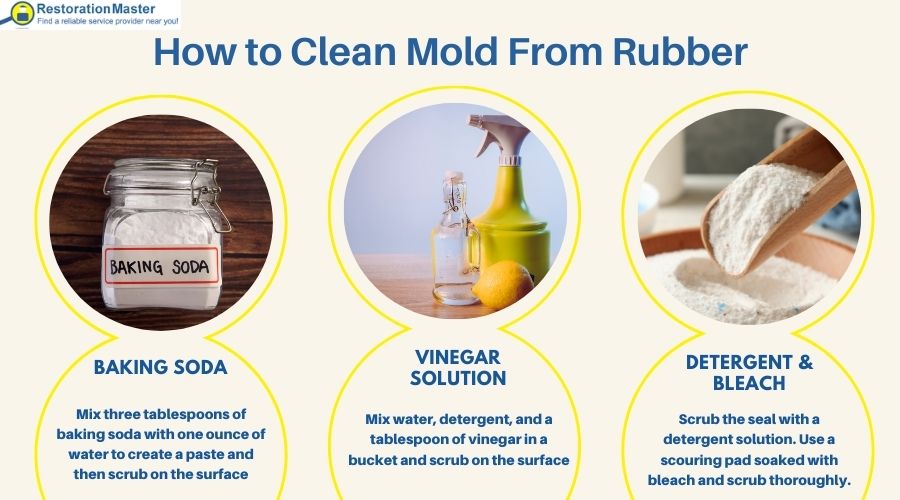
Vinegar solution:
If you are experiencing mold growing on a rubber item made of silicone rubber, you will need detergent, white distilled vinegar, microfiber cloth, gloves, safety glasses, and a bucket.
These are the steps you need to follow to clean mold with a vinegar solution:
First, you will need to put on your safety glasses and rubber gloves and prepare your cleaning solution in a bucket. You will use water, detergent, and a tablespoon of vinegar. Take the rubber materials and soak them in the solution for about five minutes. Then remove them and scrub the mold. If the mold is particularly difficult to remove, make sure to use a bristle brush to get into all the hidden surfaces. When the mold comes off, make sure to rinse the item off well and then dry it with a microfiber cloth.
Baking soda:
If you would like to use this option for cleaning mold from rubber surfaces, you will need to use a box of baking soda, water, rubber gloves and something to protect your eyes, microfiber cloth, and a bucket.
First, pour warm water in a bucket and put the item you would like to clean inside the water. If it is a large item, use a spray bottle to spray it until it is wet. Take three tablespoons of baking soda and one ounce of water and create a paste from it. Take the baking soda paste and put it on a damp cloth, then spread it on the area that has been affected by mold. Let it sit there for at least five minutes. After that, scrub the area and once all mold has been removed, make sure to properly rinse it. Finally, fully dry the item with a cloth before use.
Detergent and Bleach:
The best way to clean black mold from a washing machine rubber seal is to use a detergent solution to scrub it. If the area is heavily affected by mold, make sure to use a scouring pad soaked with bleach and scrub it well to remove mold. Whether you are cleaning a machine rubber seal, or any other rubber surface, make sure to dry it before using it again. Always makes sure you use good eye protection when using any type of chemicals to clean your rubber items. Be aware that bleach can damage rubber seals over time as they begin to deteriorate. Chlorine bleach can have up to 7.5 sodium hypochlorite, which is a corrosive chemical that can damage rubber materials. Use caution when using bleach to clean rubber surfaces and do not overuse it as it will eventually damage your materials.
The best way to prevent mold from growing on rubber surfaces is to maintain them properly. You will need to check the owner’s manual for your specific appliance such as a washing machine or dishwasher before you attempt to clean them. This will prevent any further spread of mold and additional damage to the affected materials.
If you are unsure on how to clean mold from rubber surfaces in your home, RestorationMaster can help. We offer mold remediation services to homes and businesses that have been affected by water damage. Our highly trained technicians will make sure to prevent any property damage and health issues that mold can cause.
FAQs
Is it okay to use bleach regularly to clean mold on rubber seals?
Bleach can be effective at killing mold, but it’s not ideal for frequent use on rubber. Over time, bleach can weaken and dry out rubber seals, causing cracks or brittleness. Instead, try gentler options like vinegar or baking soda for regular cleaning. Use bleach only occasionally for tough mold spots, and always rinse and dry thoroughly afterward.
Can mold on rubber surfaces damage appliances?
Yes, mold itself can deteriorate rubber seals and other components, causing leaks or mechanical problems over time. Plus, mold buildup can lead to unpleasant odors and affect the appliance’s efficiency. Address mold early to keep your appliances running well and extend their lifespan.
Are commercial mold removers safe for rubber surfaces?
Some commercial mold removers are safe, but many contain harsh chemicals that can damage rubber. Always check the product label for compatibility with rubber and test it on a small hidden area first. When in doubt, natural cleaners like vinegar or specially formulated mild cleaners are usually safer choices.
When should I call a mold remediation specialist for mold on rubber surfaces?
If mold keeps returning despite regular cleaning, or if the affected area is large, it’s time to call a professional. Mold growing behind or inside appliances, deep within rubber seals, or in hard-to-reach places often requires specialized equipment and expertise to fully remove. A remediation specialist can also identify and fix hidden moisture sources causing the mold.
What does a mold remediation specialist do differently than DIY cleaning?
Specialists use industrial-grade tools to detect moisture and mold hidden inside walls, appliances, or rubber components. They apply stronger, yet safe, mold-killing treatments that can penetrate porous materials without damaging them. Additionally, they often seal or replace contaminated materials and provide advice on preventing future mold growth.
Can a mold remediation specialist help with mold in washing machine seals?
Yes, professionals have experience dealing with mold in appliance seals, including washing machines and dishwashers. They know how to disassemble parts if needed, deep clean rubber gaskets, and treat the surrounding areas to prevent mold from returning. They can also inspect your appliances for leaks or drainage issues contributing to mold growth.

About Vince Sandri
Vince Sandri is a disaster restoration content specialist with more than 12 years of experience researching, writing, and educating property owners about water damage, fire and smoke damage, mold remediation, storm damage, and other disaster recovery topics. Since 2014, he has served as the lead contributor to RestorationMaster.us, where he has developed hundreds of in-depth service pages, educational guides, and industry-focused articles for restoration professionals across the United States.
Through extensive research and ongoing collaboration with restoration contractors, Vince has built a strong foundation in the science, processes, and best practices behind property damage mitigation and recovery. His work aligns with industry standards like the IICRC and EPA guidelines, and helps homeowners, business owners, and property managers understand how disasters impact structures, what immediate steps to take, how professional restoration works, and how to prevent long-term structural and health risks.
Vince specializes in translating complex restoration procedures — including water extraction, structural drying, smoke odor removal, mold containment, and storm damage repair — into clear, actionable information that empowers readers to make informed decisions during high-stress situations. His content aligns with industry standards and focuses on safety, accuracy, and practical response strategies.
He earned his Bachelor of Arts degree from Aurora University and his master’s degree from DePaul University. Since 2012, Vince has focused on SEO-driven website content, technical service pages, and educational resources within the disaster restoration industry.
Outside of his professional work, Vince is also a musician and performs in the Chicago, IL area.