





What Causes Water Softener Leaks? How to Fix it?
Summary: Water softener leaks can result from worn valves, cracked tanks, high water pressure, or clogged drain lines. This guide explains the most common causes and provides maintenance tips to help prevent costly repairs.
A water softener is a device used to treat hard water by removing minerals such as calcium and magnesium ions. Hard water can cause problems like scale buildup in pipes and appliances, reduced effectiveness of soaps and detergents, and potentially damaging effects on plumbing systems over time. Water softeners work by using a process called ion exchange, where the hard minerals in the water are replaced with sodium ions, resulting in softened water that is gentler on pipes, appliances, and skin. This process typically involves a tank filled with resin beads that attract and trap the hard minerals while releasing sodium ions into the water.
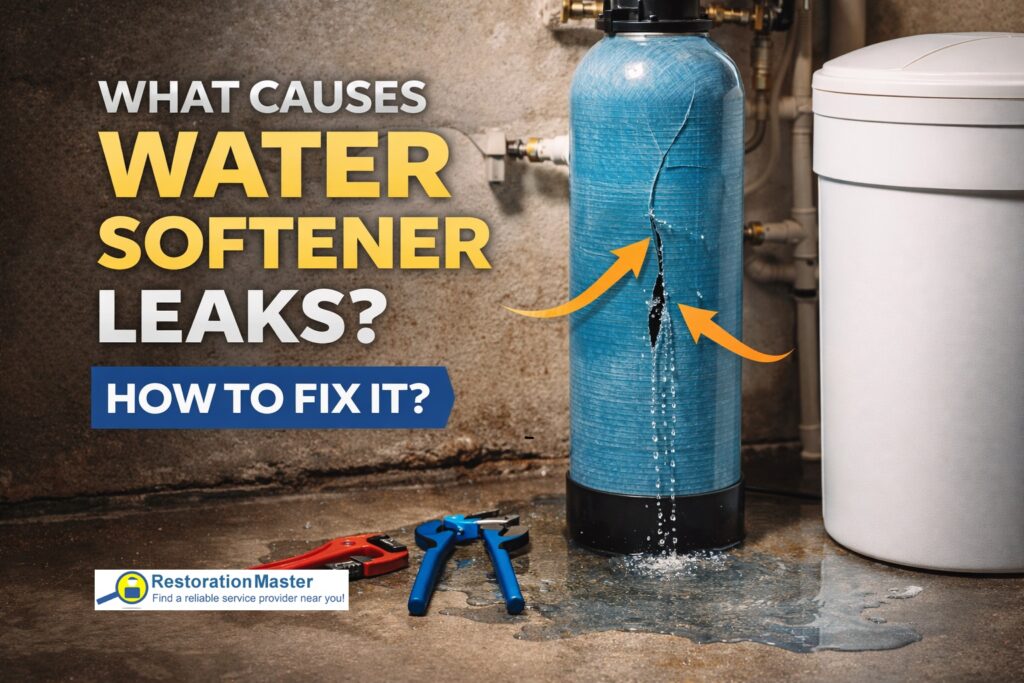
Unfortunately, water softeners can experience leaks. Detecting water pooling around the water softener system in your garage, basement, attic or maintenance room indicates a potential water damage. Leaks can occur from either the bottom of the unit or the drain line. Let’s explore the reasons behind each possibility.
Why is My Water Softener Leaking From the Bottom?
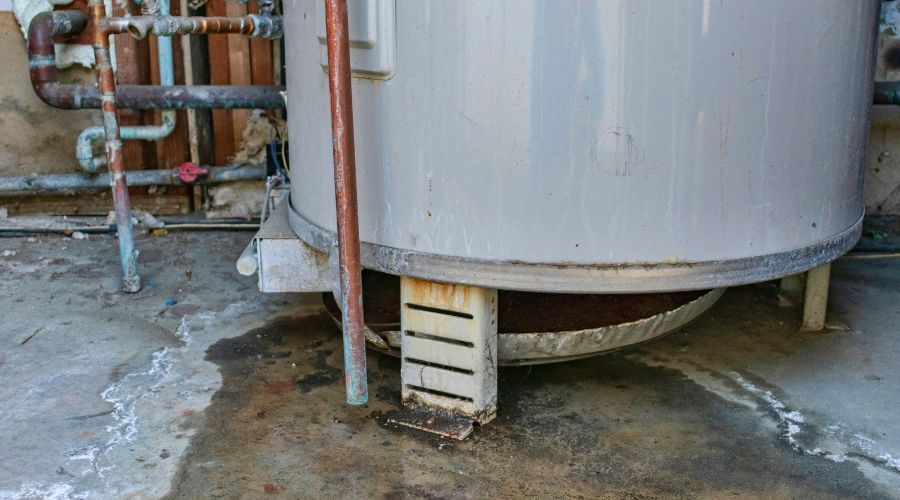
Identifying the root cause of a leak in your water softener can be challenging. Issues may arise from faulty rotor valves, cracked resin tanks, or other reasons, leading to leaks.
The following are the main causes of water softener leaks:
- Rotor valve that is cracked: The rotor valve fills up the water softener with water so it can be filtered. With time, rotor valves go through normal wear and tear. A rotor valve that is cracked is a common reason why your water softener may leak. Other times the issue may not be the rotor valve, but the seal of the valve.
- Brine tank that is damaged: If your water softener is leaking from the bottom, you may be dealing with a damaged brine tank. The brine tank is used for storing softener salt that replaces the calcium and magnesium ions with sodium. This tank is very fragile and can get damaged easily.
- Hose connection that is loose: You may just need to tighten a hose connection but if your hoses get worn due to many years of use, you will need to call a professional plumber to replace them.
- Bypass valve O-rings that are leaking: Always ensure the bypass valve O-rings are well-lubricated. Without proper lubrication, they will deteriorate and require replacement to prevent leaks. While it’s possible to replace O-rings yourself, hiring a professional is advisable to avoid water damage or other property issues.
- Issues with overflow: If you notice that water is overflowing out of your brine tank, you may have an overflow issue. Overflow happens when your float valve in the water softener malfunctions. Just re-attached the float valve to the right place to fix the leak.
- Resin tank that is cracked: The resin tank may become cracked after years of use. Usually, water softeners will last somewhere between 10 to 15 years, so if you have a leaking issue and your water softener is older, you may have a cracked resin tank.
Why is My Water Softener Leaking from the Drain Line? How to Fix It?
Drain line leaks are quite common, especially in water softener systems. Here are some reasons behind the leak and how you can fix the leak.
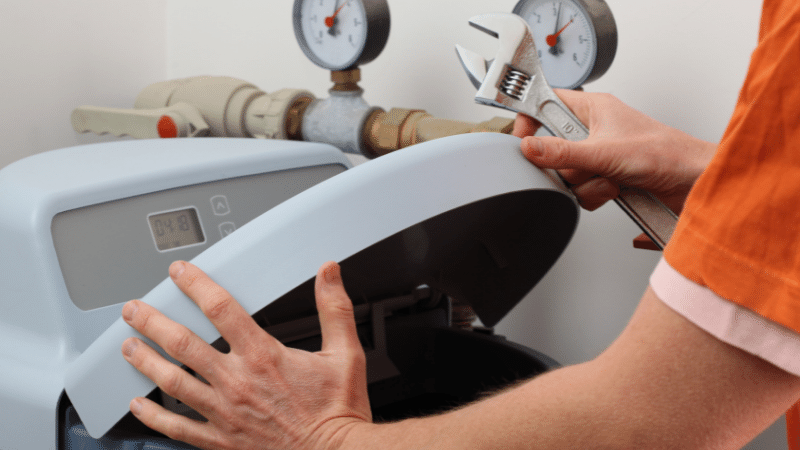
Clogged or Blocked Drain Line
- Cause: Over time, the drain line can become clogged with sediment, debris, or salt deposits. This blockage can cause water to back up and leak from the connection points.
- Solution: To address this, disconnect the drain line and inspect it for any blockages. Use a long brush or a flexible pipe cleaner to remove any debris. Flushing the line with water can also help clear any minor blockages.
Loose or Damaged Connections
- Cause: The connections between the drain line and the water softener unit or the plumbing system can loosen over time or become damaged. This can lead to leaks at these junctions.
- Solution: Check all connections to ensure they are tight and secure. If you find any damaged fittings or hoses, replace them promptly. Using Teflon tape on threaded connections can help ensure a watertight seal.
Cracked or Broken Drain Line
- Cause: The drain line itself can develop cracks or become brittle with age, leading to leaks.
- Solution: Inspect the entire length of the drain line for any visible cracks or damage. If you find any, replace the damaged section or the entire drain line if necessary. Using durable, high-quality materials for the replacement can help prevent future issues.
Malfunctioning Regeneration Cycle
- Cause: Water softeners periodically enter a regeneration cycle to clean the resin beads. If this cycle malfunctions, it can cause excessive water to flow through the drain line, leading to leaks.
- Solution: Check the regeneration settings and ensure they are properly configured according to the manufacturer’s instructions. If the settings are correct, but the problem persists, there may be an issue with the control valve or timer, which might require professional servicing.
High Water Pressure
- Cause: Excessively high water pressure in your home’s plumbing system can put extra strain on the water softener and its drain line, leading to leaks.
- Solution: Check your home’s water pressure using a pressure gauge. Ideally, it should be between 40-70 psi. If the pressure is too high, consider installing a pressure regulator to bring it within a safe range.
Frequently Asked Questions About Water Softener Leaks
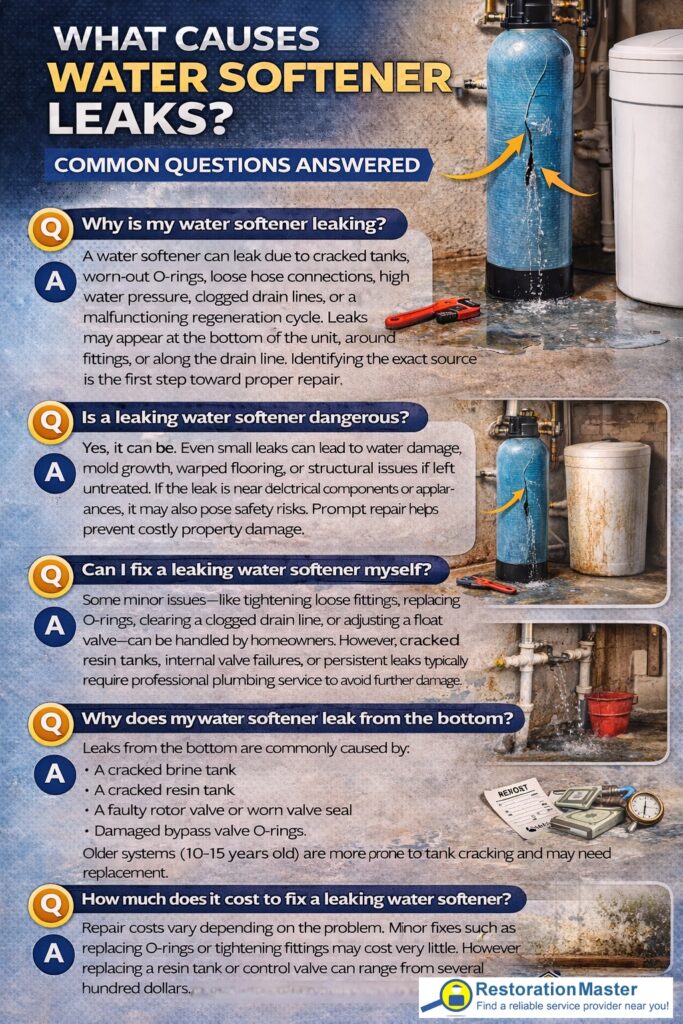
Why is my water softener leaking?
A water softener can leak due to cracked tanks, worn-out O-rings, loose hose connections, high water pressure, clogged drain lines, or a malfunctioning regeneration cycle. Leaks may appear at the bottom of the unit, around fittings, or along the drain line. Identifying the exact source is the first step toward proper repair.
Is a leaking water softener dangerous?
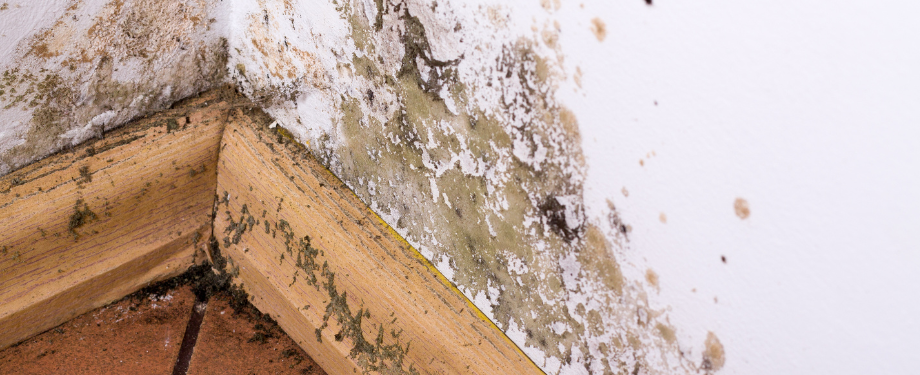
Yes, it can be. Even small leaks can lead to water damage, mold growth, warped flooring, or structural issues if left untreated. If the leak is near electrical components or appliances, it may also pose safety risks. Prompt repair helps prevent costly property damage.
Can I fix a leaking water softener myself?
Some minor issues—like tightening loose fittings, replacing O-rings, clearing a clogged drain line, or adjusting a float valve—can be handled by homeowners. However, cracked resin tanks, internal valve failures, or persistent leaks typically require professional plumbing service to avoid further damage.
Why is my water softener leaking from the bottom?
Leaks from the bottom are commonly caused by:
- A cracked brine tank
- A cracked resin tank
- A faulty rotor valve or worn valve seal
- Damaged bypass valve O-rings
- Overflow due to a malfunctioning float valve
Older systems (10–15 years old) are more prone to tank cracking and may need replacement.
Why is my water softener leaking from the drain line?
Drain line leaks often occur due to clogged lines, loose connections, brittle tubing, excessive water pressure, or improper regeneration settings. Inspecting and tightening connections, clearing blockages, or replacing damaged hoses can often resolve the issue.
How much does it cost to fix a leaking water softener?
Repair costs vary depending on the problem. Minor fixes such as replacing O-rings or tightening fittings may cost very little. However, replacing a resin tank or control valve can range from several hundred dollars. In some cases, replacing an older unit may be more cost-effective than repairing it.
How long does a water softener last?
Most water softeners last between 10 to 15 years with proper maintenance. Regular cleaning, correct salt usage, flushing resin beds, and checking for salt bridges can help extend the system’s lifespan and reduce leak risks.
Can high water pressure cause water softener leaks?
Yes. Excessively high water pressure (above 70 psi) can strain internal components and connections, leading to cracks or leaks. Installing a pressure regulator can help protect your plumbing system and water softener.
Will a leaking water softener cause mold?
If the leak goes unnoticed or is not repaired quickly, standing water can create the right conditions for mold growth within 24–48 hours. Mold can damage building materials and negatively affect indoor air quality.
When should I replace instead of repair my water softener?
If your unit is over 10–15 years old, has a cracked resin tank, or requires frequent repairs, replacement may be the more cost-effective long-term solution. A professional inspection can help determine whether repair or replacement is best.
How to Stop a Water Softener from Leaking?
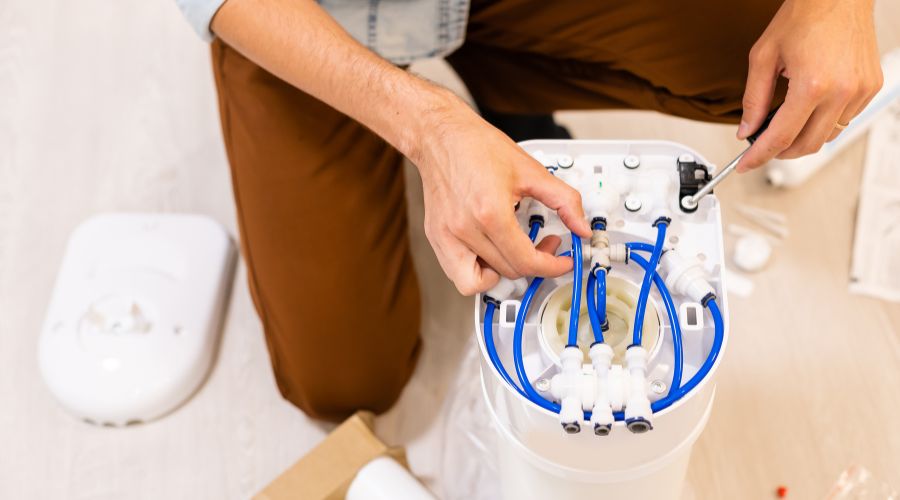
It’s always preferable to prevent a water softener from leaking rather than dealing with the aftermath. Here are 5 Pro Tips for Optimal Water Softener Maintenance:
1. Check Salt Level
Regularly checking your salt levels is the most important thing you should do to maintain your water softening system. As the salt levels decline, the water gets harder. A rule of thumb is to check the salt level every 4 to 6 weeks to avoid common hard water issues. However, depending on factors like the equipment and hardness levels, the ideal checking frequency may vary.
2. Clean the Brine Tank
Modern water softening appliances rarely need to get their brine tanks cleaned. However, make sure you clean it occasionally to avoid problems due to build-up. Read the user manual before you start cleaning to understand how to do the job well. It’s recommended to clean the brine tank every six to twelve months to ensure optimal functioning of the water softener.
3. Check for Salt Bridges
With regular use of the appliance, you may notice a hardened salt bridge layer in the brine tank. Some of the main causes of salt bridges in the brine tank are high temperature, humidity, or using poor quality salt. Salt bridges can prevent the water softener’s resin beads from regeneration. It’s important to regularly clean and check the brine tank to prevent salt bridges. Be careful though, as improper cleaning techniques can damage the softener’s walls, leading to a water leak.
4. Flush Resin Beds
The resin bed in your water softener gets regularly recharged with salt. However, the appliance can lose its efficiency due to the existence of heavy metals, iron, and other organic compounds. It’s advisable to flush the resin bed occasionally and clean it well to ensure the proper functioning of your water softener.
5. Use the Right Salt
Many people make the mistake of using old salts at home in their water softener. For best results, using the right type of salt is necessary. Two kinds of salts can be used in water softeners – crystals and cubes. Most softeners work best with cube salts, but don’t forget to check the user manual for your particular water softening system to know which salt type goes well with the appliance.
Equally important is the correct filling of the brine tank to avert leaks from the water softener. Both overfilling and underfilling the tank can cause undue pressure, resulting in cracks and leaks. By adhering to these guidelines, you can sidestep expensive repairs and ensure the longevity of your water softener system.
Call Experts for Water Damage Restoration
If you’ve experienced water damage at your home due to a leak with your water softener system, you can call water damage restoration professionals to help. These professionals use advanced equipment to remove excess water and thoroughly dry the area, and they will restore the damage caused by the water. Calling a water mitigation professional immediately after experiencing water damage will help limit the damage and quickly get your home back to its original condition.

About Vince Sandri
Vince Sandri is a disaster restoration content specialist with more than 12 years of experience researching, writing, and educating property owners about water damage, fire and smoke damage, mold remediation, storm damage, and other disaster recovery topics. Since 2014, he has served as the lead contributor to RestorationMasterFinder.com, where he has developed hundreds of in-depth service pages, educational guides, and industry-focused articles for restoration professionals across the United States.
Through extensive research and ongoing collaboration with restoration contractors, Vince has built a strong foundation in the science, processes, and best practices behind property damage mitigation and recovery. His work helps homeowners, business owners, and property managers understand how disasters impact structures, what immediate steps to take, how professional restoration works, and how to prevent long-term structural and health risks.
Vince specializes in translating complex restoration procedures — including water extraction, structural drying, smoke odor removal, mold containment, and storm damage repair — into clear, actionable information that empowers readers to make informed decisions during high-stress situations. His content aligns with industry standards and focuses on safety, accuracy, and practical response strategies.
He earned his Bachelor of Arts degree from Aurora University and his master’s degree from DePaul University. Since 2012, Vince has focused on SEO-driven website content, technical service pages, and educational resources within the disaster restoration industry.
Outside of his professional work, Vince is also a musician and performs in the Chicago, IL area.