7 Basement Flooding Prevention Tips
Key Takeaways
- Basement flooding is often caused by heavy rain, melting snow, clogged gutters, foundation cracks, appliance leaks, sump pump failure, and poor yard drainage.
- Cleaning gutters and extending downspouts away from the home can help prevent water from pooling near the foundation.
- Proper yard grading, French drains, and dry creek beds can redirect water away from the basement.
- Running a dehumidifier helps control basement moisture and reduces the risk of mold growth.
- Foundation cracks, window wells, and basement windows should be inspected regularly for leaks.
- A working sump pump with a backup system is one of the most important defenses against basement flooding.
- Homeowners should review insurance coverage because standard policies may not cover all types of basement flood damage.
- If flooding occurs, fast professional cleanup helps prevent mold, wood rot, structural damage, and higher restoration costs.
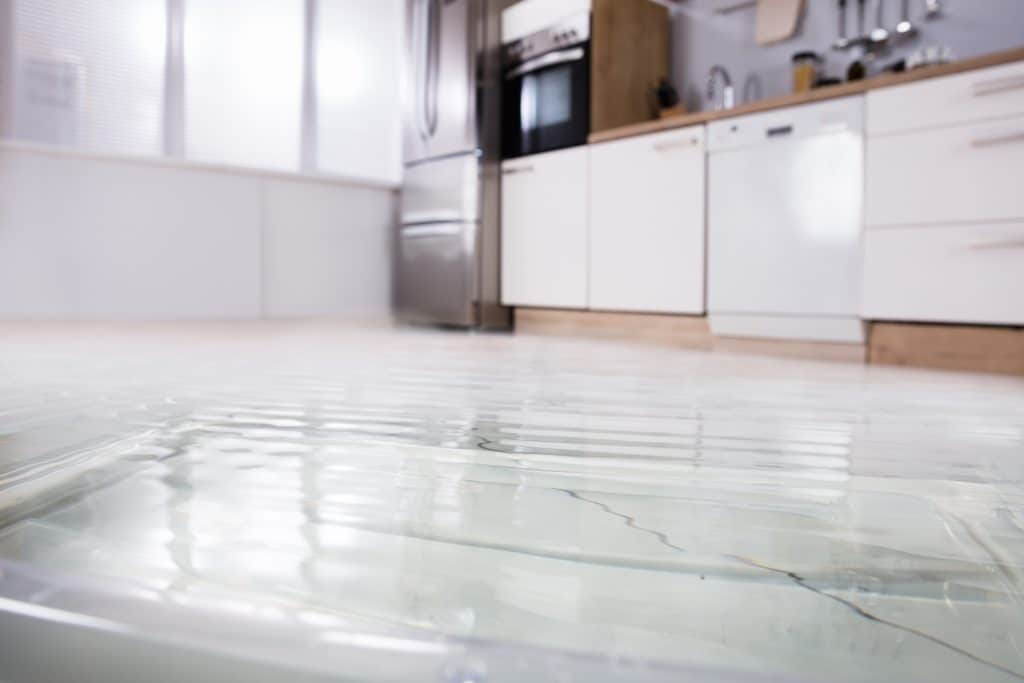
Proactive homeowners understand the value of taking steps to prevent basement flooding. Without practical measures to keep water out, moisture will invite itself in. The unwelcome houseguest causes a host of water damage and forces homeowners to dig deep into their pockets to remedy the ruin.
Why Do Basements Flood?
Before embarking on a crusade to secure the basement, it is important to know the common sources of flooding in the lowest level of the home. Washing machines and hot water tanks are often housed in the basement; when appliances malfunction, water damage can spread throughout multiple areas of the home.
Severe weather conditions, like seasonal thunderstorms or rapid spring snowmelt, contribute to a high rate of home flooding. The excess water overflows from the gutter and pools around the foundation. Cracks in the foundation or weak areas permit water to seep inside and flood the basement.
Many homeowners will experience a flooded basement at some point during the occupancy of their home. Whether the flood is six inches of water or minor seepage that dampens the basement carpeting, homeowners will want to avoid the time-consuming task of restoring a water damaged basement.
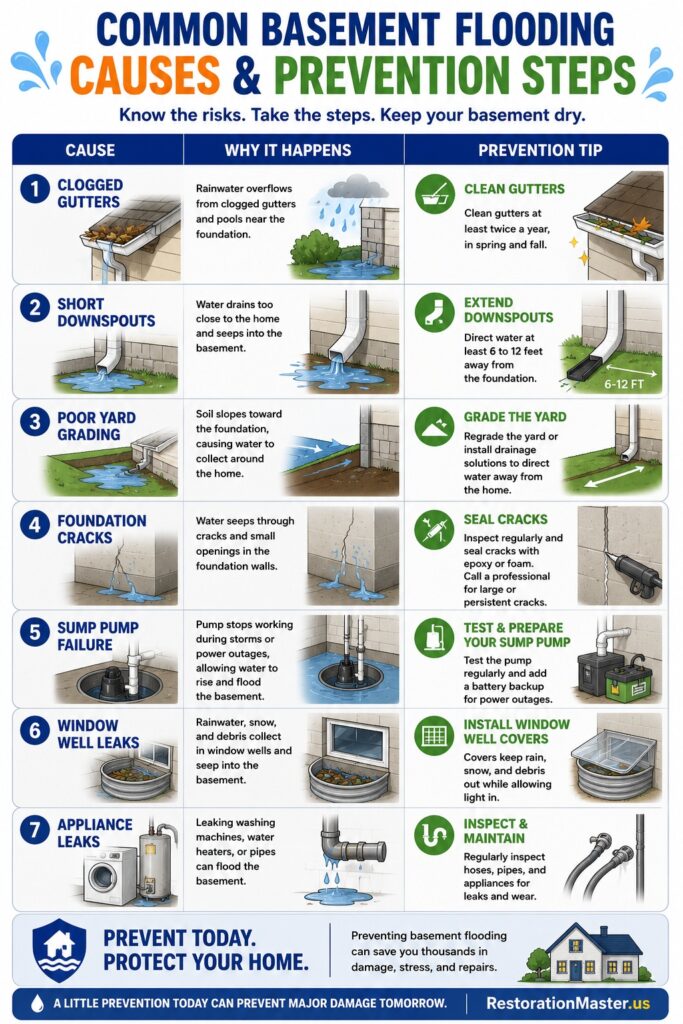
Common Basement Flooding Causes and Prevention Steps
| Cause of Basement Flooding | Why It Happens | Prevention Tip |
|---|---|---|
| Clogged Gutters | Rainwater overflows and pools near the foundation | Clean gutters at least twice a year |
| Short Downspouts | Water drains too close to the home | Extend downspouts 6 to 12 feet away |
| Poor Yard Grading | Soil slopes toward the foundation | Regrade the yard or install drainage |
| Foundation Cracks | Water seeps through weak points | Seal cracks and schedule an inspection |
| Sump Pump Failure | Pump stops working during storms or outages | Test the pump and add a battery backup |
| Window Well Leaks | Rain collects around below-grade windows | Install properly fitted window well covers |
| Appliance Leaks | Water heater or washing machine fails | Inspect hoses, tanks, and shutoff valves |
Basement Flood Prevention Tips
-
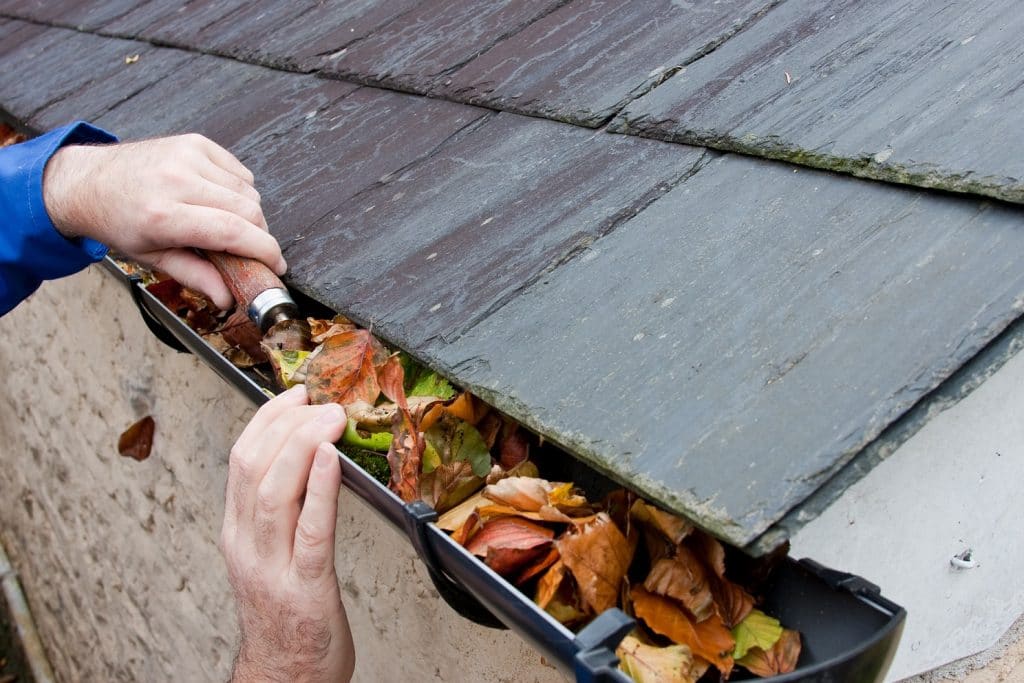
Maintain the gutters. Clean gutters at least twice annually, once in spring and once in autumn. A gutter blocked by natural debris, like twigs and leaves, pushes rainwater down the siding and around the perimeter of the home. The pooling water has a chance to enter the basement via foundation cracks and faults.
Ensure the downspout directs water at least 6 to 12 feet away from the home. The water should drain downwards and away from the home. Ensure the water does not drain into the municipal sewer system, or the home will be subject to increased water backflows into the basement.
Purchase inexpensive, metal downspout extensions rather than plastic, as the metal ones fail to leak. If the yard has little room for add-on extensions, install underground PVC drain pipes, which direct water to the front or back yards. Be careful to not allow the pipes to flood the neighbors’ basements.
- Grade the yard. A lawn sloped away from the home prevents water from collecting around the structure’s perimeter, and, thereby, significantly reduces the risk for basement flooding. Regrade the lawn or install French drains to ensure water has no path to leak into the basement.
Homeowners with a knack for DIY landscaping tasks can dig around the house and fill this dry creek with cobblestones or river rocks. Splicing the lawn in such a way directs excess water into this creek around the home rather than haplessly allow the water to run toward the building.
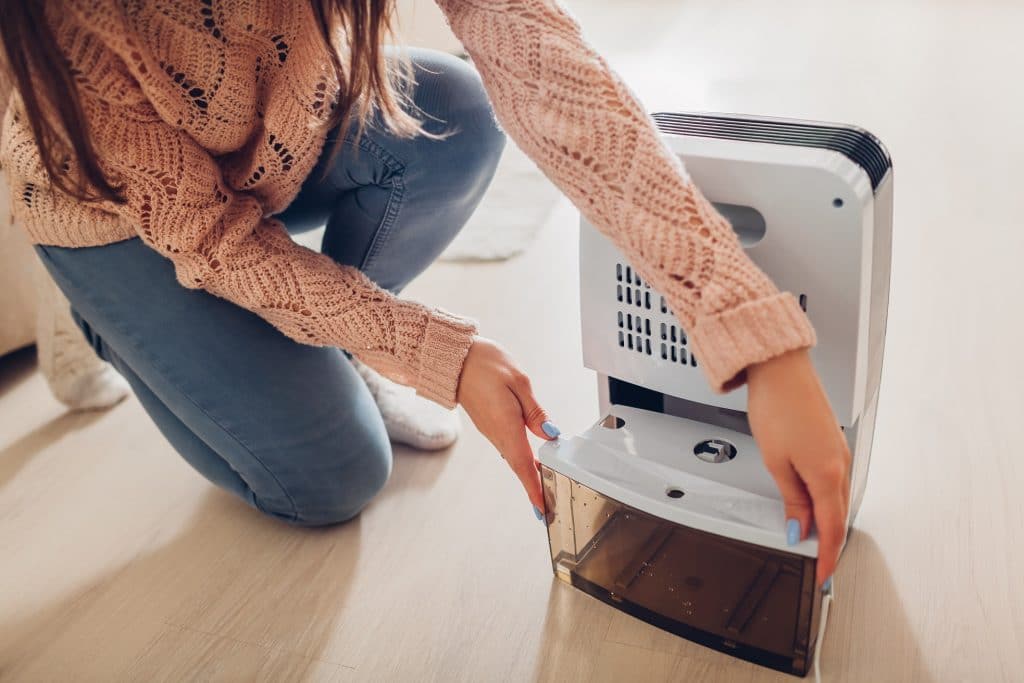
- Run a dehumidifier. With the basement being a cavity in the ground, it will inevitably remain moist and humid. Curtail the dampness by running a dehumidifier 24 hours a day, especially from April through October. The dehumidifier dries the condensation that forms on the foundation walls in summer.
- Seal foundation cracks. Regularly inspect the basement for foundation cracks. Minor, vertical cracks are expected in concrete foundations, especially as new houses settle. An epoxy sealant or polyurethane foam injection are recommended for sealing hairline faults. Persistent cracks should be sealed by a professional contractor.
-
 Test the sump pump. Power failures that occur during rainstorms are a nightmare, especially when homeowners neglect to maintain the sump pump. Install a 120-volt backup sump pump equipped with a check valve for extra precaution. Ensure the pump drains to the outside and away from the home.
 - Add window well covers. Without window well covers positioned over below-grade basement windows, rain and natural debris will find their way into the basement. Window well covers work by preventing rainwater from seeping through the basement windows. Clear, acrylic covers allow in light while helping keep the basement dry.
Poorly installed window well covers, inadequate drainage and wrong window well sizing are common problems that defeat the function of window well covers. Enlisting a basement waterproofing contractor will fix moisture issues that stem from improper window well cover installations.
- Review insurance. Homeowners’ insurance policies are not likely to cover basement flooding. Flood insurance must be purchased separately from the National Flood Insurance Program. Mortgage lenders require homeowners with properties located in high risk flood areas to purchase flood insurance.
Flood damage may be covered by insurance if the issue was not caused by the homeowner’s failure to perform routine maintenance. Check your homeowner’s insurance policy for specific coverage relative to basement flooding.
FAQ
What is the most common cause of basement flooding?
Clogged gutters, poor drainage, foundation cracks, and sump pump failure are among the most common causes of basement flooding. Heavy rain and melting snow can make these issues worse by forcing water toward the foundation.
How far should downspouts drain away from the house?
Downspouts should direct water at least 6 to 12 feet away from the foundation. This helps prevent water from pooling near basement walls and seeping inside.
Can a dehumidifier prevent basement flooding?
A dehumidifier will not stop flooding, but it can reduce basement humidity, control condensation, and help prevent mold growth in damp areas.
How often should I test my sump pump?
Homeowners should test their sump pump at least a few times a year, especially before spring storms or periods of heavy rain. Pour water into the sump pit to make sure the pump activates and drains properly.
Do window well covers help prevent basement leaks?
Yes. Properly installed window well covers help keep rainwater, snow, leaves, and debris out of basement window wells, reducing the chance of leaks.
Does homeowners insurance cover basement flooding?
It depends on the cause. Sudden internal water damage may be covered, but flooding from heavy rain, groundwater, or sewer backups may require separate flood or sewer backup coverage.
What should I do first if my basement floods?
Avoid standing water if there is any electrical risk, shut off the water source if possible, document the damage, and call a professional flood cleanup company right away.
How quickly can mold grow after basement flooding?
Mold can begin growing within 24 to 48 hours after water exposure, especially in damp basements with poor ventilation.
Basement Flood Restoration
Restoring a flooded basement is no easy task, making flood prevention the most cost-effective method. Pumping out a few inches of clean water alone will set homeowners back $500 to $1,500 to start. The high costs associated with drying out and cleaning up the basement can reach upwards of $10,000.
The flood damage restoration expense only increases with the size of the basement. Additional factors that spike a cleanup cost include whether the water is sewer water polluted with toxic contaminants or clean water from plumbing pipes.
Need Help After Basement Flooding?
 When water damage strikes, a delayed response only aggravates the destruction. Mold flourishes within 24 to 48 hours of water damage. Wood structures begin to rot and weaken, leading to an uninhabitable environment. Rather than wait for damage to spread, consult a restoration professional for immediate water damage restoration services.
Restoration professionals are prepared to extract all traces of water from your flooded basement or any part of your property. Water damage, especially when it contains sewage, is an emergency situation. Technicians will arrive onsite to expedite the restoration process promptly.
Included in the comprehensive water damage cleanup services are an initial assessment of the damage, extraction of excess moisture, a thorough dehumidification procedure and a sterilization process to ensure the home is free from waterborne bacteria.
Even a small amount of basement water can lead to mold growth, damaged flooring, rotted wood, ruined belongings, and costly structural repairs. If your basement has flooded, acting quickly is the best way to reduce damage and prevent long-term problems.
Call RestorationMaster at (888) 782-0519 for professional basement flood cleanup and water damage restoration services. Our restoration specialists can extract standing water, dry affected materials, sanitize the area, and help restore your basement safely and efficiently.

About Vince Sandri
Vince Sandri is a disaster restoration content specialist with more than 12 years of experience researching, writing, and educating property owners about water damage, fire and smoke damage, mold remediation, storm damage, and other disaster recovery topics. Since 2014, he has served as the lead contributor to RestorationMaster.us, where he has developed hundreds of in-depth service pages, educational guides, and industry-focused articles for restoration professionals across the United States.
Through extensive research and ongoing collaboration with restoration contractors, Vince has built a strong foundation in the science, processes, and best practices behind property damage mitigation and recovery. His work aligns with industry standards like the IICRC and EPA guidelines, and helps homeowners, business owners, and property managers understand how disasters impact structures, what immediate steps to take, how professional restoration works, and how to prevent long-term structural and health risks.
Vince specializes in translating complex restoration procedures — including water extraction, structural drying, smoke odor removal, mold containment, and storm damage repair — into clear, actionable information that empowers readers to make informed decisions during high-stress situations. His content aligns with industry standards and focuses on safety, accuracy, and practical response strategies.
He earned his Bachelor of Arts degree from Aurora University and his master’s degree from DePaul University. Since 2012, Vince has focused on SEO-driven website content, technical service pages, and educational resources within the disaster restoration industry.
Outside of his professional work, Vince is also a musician and performs in the Chicago, IL area.