Top Fire Damage Restoration Tools Every Professional Uses
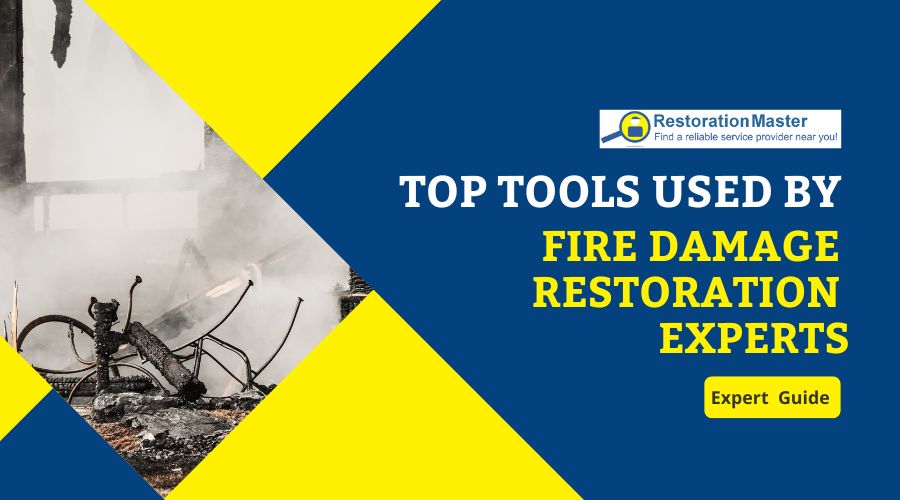
When fire strikes, the aftermath can be overwhelming as charred walls, lingering smoke, and water damage from firefighting efforts can leave a home or business in disarray. Fire damage restoration is a complex process that requires specialized tools and expertise to safely and effectively return a property to its pre-loss condition. From powerful cleaning equipment to advanced detection devices, the right tools make all the difference in restoring safety, functionality, and comfort. In this guide, we explore the top tools professionals rely on to tackle fire damage and bring properties back to life.
The Importance of Specialized Equipment for Fire Damage Restoration
Restoring a property after a fire isn’t as simple as cleaning soot off affected surfaces. Fire damage often comes with a mix of hazards, including structural instability, lingering smoke, and water damage from firefighting efforts. Using specialized equipment is crucial for helping homes and businesses effectively recover following a fire.
Professional-grade tools allow restoration experts to safely assess the damage, remove harmful residues, and mitigate further issues such as mold growth or corrosion. From industrial-strength vacuums and air scrubbers to thermal imaging cameras and ozone generators, each piece of equipment is designed to tackle specific challenges. Using the right tools not only speeds up the restoration process but also ensures the property is safe, clean, and habitable once again.
Tools Used for Fire Damage Cleanup and Restoration
Restoration professionals rely on a range of equipment to address every aspect of fire damage, from removing hazardous soot particles and neutralizing smoke odors to drying out moisture and inspecting structural integrity. Using the right tools not only speeds up the recovery process but also ensures the property is thoroughly restored and safe for occupants.
Here are some of the most essential tools used in fire damage cleanup and restoration:
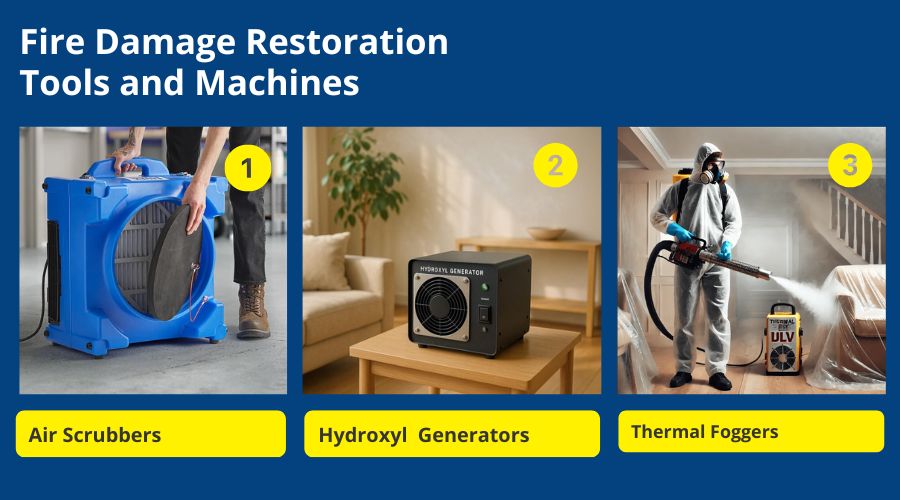
Air Scrubbers and Purifiers
One of the biggest challenges after a fire is the lingering smoke and soot that can infiltrate every corner of a property. Even after visible debris is removed, microscopic particles can remain suspended in the air, causing persistent odors and potential health risks. Air scrubbers and purifiers play a critical role in removing soot particles.
- Air Scrubbers are high-powered filtration systems that pull in contaminated air and pass it through multiple filters, including HEPA filters, to capture soot, ash, and other fine particles. By continuously cycling and cleaning the air, they help reduce airborne irritants and prevent them from settling on surfaces.
- Air Purifiers, including ozone generators or hydroxyl generators, are used to neutralize smoke odors at a molecular level. These devices break down odor-causing molecules, effectively eliminating the smell of smoke rather than just masking it.
Together, these tools not only improve air quality during the restoration process but also create a healthier environment for both restoration professionals and future occupants. Proper use of air scrubbers and purifiers ensures that the property is safer, fresher, and fully restored after fire damage.
Hydroxyl and Ozone Generators
Lingering smoke odors are one of the most challenging aspects of fire damage restoration. Even after soot and debris are removed, the smell of smoke can penetrate walls, furniture, and fabrics. To effectively neutralize these odors, restoration professionals use hydroxyl and ozone generators.
- Ozone Generators produce ozone molecules that interact with odor-causing particles, breaking them down and eliminating the smell at a molecular level. This process is highly effective for strong, stubborn odors but must be used with caution, as ozone can be harmful to humans and pets if not properly controlled.
- Hydroxyl Generators, on the other hand, use safe hydroxyl radicals to neutralize smoke odors. Unlike ozone, hydroxyl generators can be used in occupied spaces, making them a versatile option for deodorizing residential or commercial properties. Both devices are often used in conjunction with air scrubbers and thermal foggers to ensure comprehensive odor removal.
By incorporating hydroxyl and ozone generators into the restoration process, professionals can restore not only the appearance but also the air quality of fire-damaged properties, leaving them fresh, safe, and fully habitable.
Thermal Foggers
Thermal foggers are a powerful tool used in fire damage restoration to combat lingering smoke odors that traditional cleaning methods can’t fully remove. After a fire, smoke can penetrate walls, furniture, and other porous materials, leaving behind stubborn, unpleasant smells. Thermal fogging addresses this problem at a molecular level.
A thermal fogger heats deodorizing solutions to create a fine, invisible fog that can penetrate deep into surfaces and hard-to-reach areas. As the fog circulates through the property, it bonds with smoke particles and neutralizes odor-causing molecules. Unlike masking agents, which only cover up smells, thermal foggers actually eliminate them, ensuring the property smells clean and fresh.
Restoration professionals often use thermal foggers in conjunction with other tools, such as air scrubbers and ozone generators, to maximize odor removal and improve overall air quality. By incorporating thermal fogging into the restoration process, properties affected by fire are not only visually restored but also free from the lingering scents of smoke.
Industrial-Grade Dehumidifiers and Air Movers
Fire damage often comes with a hidden but serious issue: water damage. Whether from firefighting efforts or sprinkler systems, excess moisture can seep into walls, floors, and ceilings, creating ideal conditions for mold growth and structural deterioration. To address this, restoration professionals rely on industrial-grade dehumidifiers and air movers.
- Industrial-Grade Dehumidifiers are designed to extract large amounts of moisture from the air and building materials. By lowering humidity levels quickly, they prevent mold and mildew from developing and help stabilize wood, drywall, and other materials affected by water.
- Air Movers, also known as high-velocity fans, work in tandem with dehumidifiers by circulating air throughout the property. This airflow accelerates the drying process, reaching hidden or hard-to-access areas such as wall cavities, under flooring, and inside ventilation systems.
Together, these tools are essential for comprehensive fire damage restoration. By efficiently removing moisture and speeding up the drying process, industrial-grade dehumidifiers and air movers not only protect the property from further damage but also create a safer, healthier environment for occupants once restoration is complete.
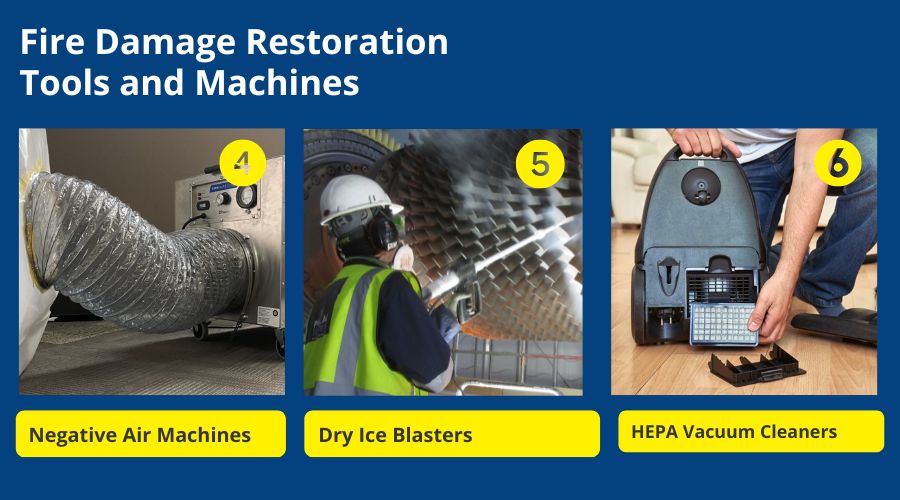
Negative Air Machines
Negative air machines are a crucial tool in fire damage restoration, helping to maintain a safe and clean environment during the cleanup process. Fires produce not only soot and smoke but also fine particulate matter that can spread throughout a property, contaminating unaffected areas. Negative air machines are designed to control this spread.
These machines work by creating a pressure differential: they pull air from a contaminated space, filter it through high-efficiency particulate air (HEPA) filters, and exhaust the cleaned air outside or into a controlled area. This process prevents airborne contaminants from migrating to other parts of the building, protecting both the property and the people inside.
Restoration professionals often use negative air machines in conjunction with containment barriers to isolate affected areas, ensuring that soot, smoke, and dust are effectively contained. By controlling the flow of contaminated air, these machines play a critical role in protecting the integrity of the property and improving overall air quality during the restoration process.
HEPA Vacuum Cleaners
After a fire, soot, ash, and fine debris can cover surfaces and infiltrate carpets, upholstery, and hidden crevices. Ordinary vacuums aren’t equipped to handle these hazardous particles, which is why restoration professionals rely on HEPA vacuum cleaners.
HEPA (High-Efficiency Particulate Air) vacuums are designed to capture extremely small particles, including soot, ash, and other fire-related contaminants, preventing them from becoming airborne and spreading throughout the property. By effectively containing these particles, HEPA vacuums not only help restore the appearance of affected surfaces but also improve air quality and reduce health risks for occupants and restoration workers.
In practice, HEPA vacuums are used on floors, furniture, vents, and even within wall cavities to remove embedded soot and ash. They are often one of the first tools deployed during cleanup, preparing the property for deeper cleaning, deodorization, and repairs.
Dry Ice Blasters
Dry ice blasting is a highly effective technique used in fire damage restoration to remove soot, char, and smoke residues from surfaces without causing further damage. This method uses solid carbon dioxide (dry ice) pellets propelled at high speeds to clean surfaces, making it ideal for delicate materials that could be harmed by abrasive cleaning methods or water-based solutions.
As the dry ice pellets strike the affected surfaces, they sublimate, turning directly from solid to gas, lifting soot, grime, and other contaminants away without leaving secondary waste behind. This makes cleanup faster and more environmentally friendly, as it minimizes the need for additional cleaning agents or water.
Restoration professionals often use dry ice blasting on walls, ceilings, electrical components, machinery, and even historical or valuable items that require careful handling. Its precision and efficiency make it an invaluable tool in the fire restoration toolkit, allowing for thorough cleaning while preserving the integrity of the property.
Thermal Imaging Cameras
Thermal imaging cameras are an essential tool in fire damage restoration, helping professionals detect hidden issues that aren’t visible to the naked eye. Fires can cause structural damage, trapped heat, and moisture pockets that may go unnoticed during a standard inspection. Thermal imaging allows restoration teams to quickly identify these problem areas. For similar technology used to detect hidden water damage, see our guide on detecting water damage in your home with an infrared camera. By detecting differences in temperature, these cameras reveal hotspots, lingering embers, and areas of retained moisture behind walls, ceilings, and floors. This information is crucial for preventing further damage, such as hidden smoldering that could reignite or moisture that could lead to mold growth.
In practice, thermal imaging cameras guide restoration professionals in targeting cleanup, drying, and repairs more effectively, saving time and ensuring a safer, more thorough restoration process. By combining visual inspection with thermal data, teams can address both the visible and hidden impacts of fire, restoring the property efficiently and safely.
Personal Protective Equipment (PPE)
Fire damage restoration is not only labor-intensive but also hazardous. Soot, ash, smoke residues, chemicals, and unstable structures all pose risks to restoration professionals. To protect themselves, workers rely on personal protective equipment (PPE), which is a critical component of any safe restoration process.
Common PPE used in fire damage restoration includes:
- Respirators or masks to prevent inhalation of harmful smoke particles and chemical residues.
- Gloves to protect hands from sharp debris, hot surfaces, and cleaning chemicals.
- Protective suits and coveralls to shield skin and clothing from soot, debris, and chemical exposure.
- Eye protection such as goggles or face shields to prevent irritation or injury from airborne particles.
- Boots with slip-resistant soles to provide stability on wet or uneven surfaces.
Proper use of PPE ensures that restoration professionals can safely perform cleanup, demolition, and repairs without risking their health. By prioritizing safety alongside effective tools and techniques, fire damage restoration teams can complete the job efficiently while minimizing the dangers associated with post-fire environments.
Fire Damage Restoration Experts in Texas
Fire damage restoration is a complex process that requires specialized tools, expert knowledge, and careful attention to safety. From air scrubbers and thermal foggers to dry ice blasters and thermal imaging cameras, each tool plays a critical role in cleaning, deodorizing, and restoring properties affected by fire. Proper use of these tools ensures that a home or business is not only visually repaired but also safe, healthy, and fully habitable.
If your property has been affected by a fire in Katy, Houston or Spring, TX, don’t wait until the damage worsens, reach out to trusted fire damage restoration experts right away. With the right equipment and experience, these professionals can help you recover faster, protect your property, and get your space back to a safe, livable condition.
Frequently Asked Questions
Can homeowners rent fire damage restoration tools?
Some equipment, such as air movers, dehumidifiers, or thermal cameras, can be rented. However, highly specialized tools like dry ice blasters or ozone generators are usually handled by professionals due to safety and training requirements.
What certifications should restoration professionals have to use these tools?
Experts typically hold IICRC (Institute of Inspection, Cleaning and Restoration Certification) credentials in fire and smoke restoration. Proper training ensures safe and effective use of advanced equipment.
Are there differences in tools for residential vs. commercial fire restoration?
Yes. Commercial properties often require larger-capacity air movers, industrial-grade dehumidifiers, and more powerful negative air machines due to scale, while residential tools are smaller but equally effective for home environments.

About Vince Sandri
Vince Sandri is a disaster restoration content specialist with more than 12 years of experience researching, writing, and educating property owners about water damage, fire and smoke damage, mold remediation, storm damage, and other disaster recovery topics. Since 2014, he has served as the lead contributor to RestorationMaster.us, where he has developed hundreds of in-depth service pages, educational guides, and industry-focused articles for restoration professionals across the United States.
Through extensive research and ongoing collaboration with restoration contractors, Vince has built a strong foundation in the science, processes, and best practices behind property damage mitigation and recovery. His work aligns with industry standards like the IICRC and EPA guidelines, and helps homeowners, business owners, and property managers understand how disasters impact structures, what immediate steps to take, how professional restoration works, and how to prevent long-term structural and health risks.
Vince specializes in translating complex restoration procedures — including water extraction, structural drying, smoke odor removal, mold containment, and storm damage repair — into clear, actionable information that empowers readers to make informed decisions during high-stress situations. His content aligns with industry standards and focuses on safety, accuracy, and practical response strategies.
He earned his Bachelor of Arts degree from Aurora University and his master’s degree from DePaul University. Since 2012, Vince has focused on SEO-driven website content, technical service pages, and educational resources within the disaster restoration industry.
Outside of his professional work, Vince is also a musician and performs in the Chicago, IL area.