How Smart Home Devices Prevent Water, Fire & Mold Damage
This article was written by the RestorationMasterFinder research team and reviewed by
restoration professionals from our Boston-area contractor network. These licensed and
insured specialists handle real-world water, fire, and mold losses every day and provided
input based on what they see in Massachusetts homes.
Property damage almost never starts the way people imagine it does.
It rarely begins with a dramatic flood or a wall of flames. More often, it begins with something quiet. A refrigerator line loosens behind a cabinet. A toilet supply valve starts to drip inside a wall. A breaker overheats slightly every time an appliance turns on. A bathroom fan stops venting moisture and humidity slowly builds in the ceiling.
By the time a homeowner notices, water has already traveled through flooring and drywall, smoke has already coated surfaces, or mold has already taken root behind the walls.
Through our nationwide network of trained and vetted restoration contractors, RestorationMaster reviews thousands of these losses every year. One pattern is consistent across all of them: the size of the final damage is rarely related to the size of the original problem.
It is almost always related to how long the problem went undetected.
That is where smart home devices are beginning to change the economics of property damage.
Why early detection is the single most important factor
In the restoration industry, time is more important than severity.
A half-inch supply line can release more than 250 gallons of water per hour. Water can move through drywall and insulation in minutes and spread underneath flooring long before it appears on the surface. Mold spores can begin to colonize damp materials in as little as 24 to 48 hours. Smoke from a small electrical fire can travel through an HVAC system and settle into every room in a home in under an hour.
Once these things happen, restoration becomes far more complicated and far more expensive.
Across our contractor network, homes with automatic water shutoff systems typically experience water losses that are 60 to 80 percent smaller than similar homes without them, simply because the leak is stopped before water can spread into floors and walls.
We refer to this as the exposure window. It is the period between when damage starts and when someone intervenes. Smart home devices exist to shrink that window.
The five types of damage smart devices can help prevent
From the perspective of our contractor network, nearly all residential restoration jobs fall into a handful of categories. Smart home technology now exists to detect and limit every one of them.
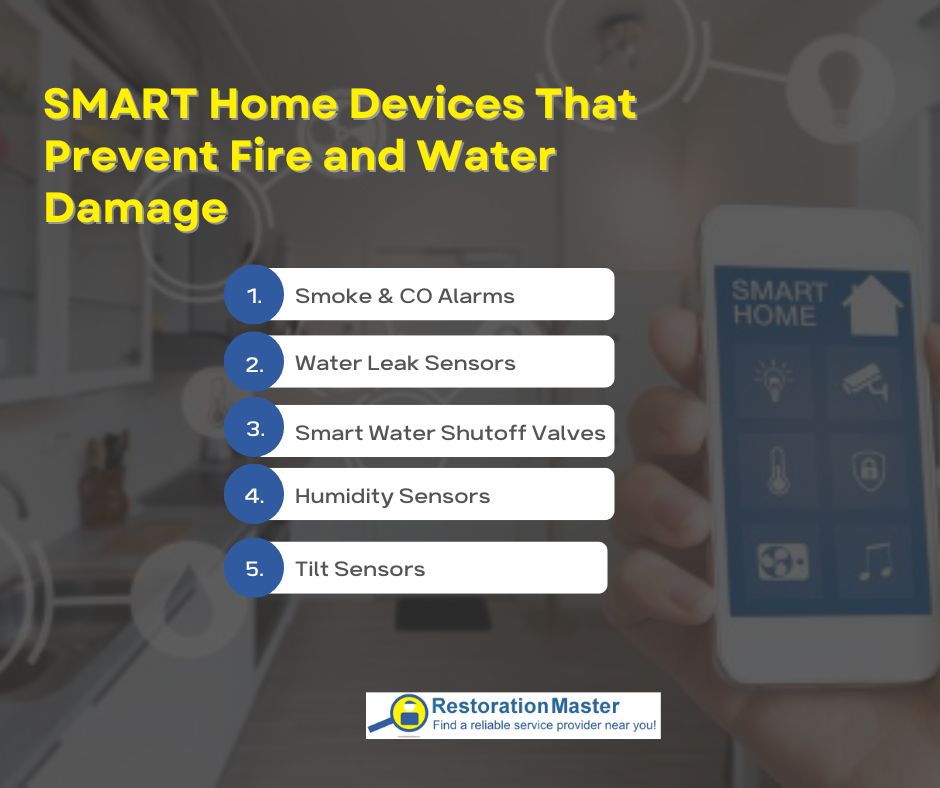
1. Burst pipes and major water leaks
Pressurized water failures are the most destructive and the most common losses in residential buildings. These include broken washing machine hoses, failed toilet valves, cracked supply lines, and ruptured water heaters.
Whole-home systems such as Phyn Plus, SharkBite Leak Detector + Shutoff, and similar products monitor water flow and pressure at the main supply. These systems learn what “normal” water use looks like in a home. When they detect flow patterns that do not match human usage, such as water running continuously or pressure dropping suddenly, they shut off the water automatically.
From a restoration standpoint, this changes everything. A pipe that would normally flood a home for hours can be stopped in seconds, often limiting the damage to a small area that can be dried and repaired quickly.
If a leak or flooding has already started, our Water Damage Restoration Guide walks through the professional drying and cleanup process used to prevent structural damage and mold.
2. Slow leaks and hidden moisture
Some of the most expensive losses we see are not caused by dramatic pipe bursts. They are caused by slow leaks and moisture intrusion that go unnoticed for weeks or months. These include dripping drain lines, moisture seeping through foundation walls, condensation buildup in crawl spaces, and small roof leaks.
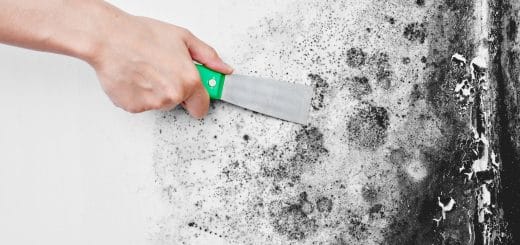
Devices like Govee hygrometers, SmartThings moisture sensors, and similar humidity monitors track changes in moisture levels in areas people rarely inspect. When humidity rises above normal or water is detected where it should not be, homeowners receive alerts before mold and structural rot develop.
This is especially important because mold remediation and structural drying are among the costliest services in the restoration industry.
3. Fire, smoke, and carbon monoxide
Modern homes contain more electrical equipment, batteries, and appliances than ever before. Many residential fires do not begin with open flames. They begin with overheating wiring, overloaded circuits, or appliances that start to smolder.
Smart smoke and heat detectors such as Nest Protect sense changes in heat, smoke particles, and carbon monoxide earlier than traditional alarms. Early alerts allow homeowners or emergency services to respond before a fire becomes structural.
In real restoration jobs, this often means the difference between cleaning smoke residue and rebuilding rooms.
4. HVAC and appliance failures
When air conditioners freeze, furnaces overheat, sump pumps stop working, or dehumidifiers fail, water and moisture problems are not far behind. Frozen coils can lead to flooding. Failed sump pumps can allow basements to fill. Broken dehumidifiers can raise humidity levels enough for mold to grow.
Smart plugs, temperature sensors, and vibration monitors can detect when equipment is running outside its normal range and send alerts before damage occurs.
5. Break-ins and vandalism
Motion sensors and smart cameras do more than protect against theft. Many of the water and fire losses our contractors see begin after a break-in. Copper theft, broken pipes, and vandalism frequently lead to flooding and electrical hazards. Early alerts reduce how long those situations go unnoticed.
What we see across our restoration network
Because RestorationMaster connects homeowners with trained, vetted, and verified restoration companies across the country, we have a unique view of how damage plays out in real homes.
Homes with automatic water shutoff systems almost always have smaller water losses. Homes with humidity sensors tend to catch mold-causing moisture earlier. Homes with smart fire detection usually suffer limited smoke damage rather than full rebuilds.
The technology does not prevent every incident. But it consistently prevents small failures from turning into major insurance claims.
Why alerts alone are not enough
One of the most common problems we see is homeowners receiving an alert and not knowing what to do next. They know there is water or smoke, but they do not know how serious it is or who to call.
Every hour that passes allows damage to spread. This is where RestorationMaster plays a critical role.
How RestorationMaster fits into the protection chain
RestorationMaster is a platform that connects homeowners with local restoration companies that have been trained, vetted, and verified for professional credentials, equipment standards, and emergency response capability.
When a smart device alerts a homeowner to water, fire, or moisture, our platform helps them quickly find qualified professionals who can:
- Stop water intrusion
- Dry and dehumidify structures
- Remove smoke and soot
- Prevent mold growth
- Document damage for insurance
Smart devices provide the warning. Our network provides the response.
Why this matters for homeowners and insurers
Insurance companies are paying close attention to these technologies. Many now offer discounts for homes with automatic water shutoff and monitored smoke detection because losses in sensor-equipped homes are smaller, cleaner, and easier to resolve.
Fewer claims involve mold. Fewer require full rebuilds. Fewer turn into coverage disputes. From a risk perspective, smart detection makes a home less expensive to insure.
The future of home protection
Homes are becoming monitored systems rather than passive structures. Sensors, shutoff valves, and real-time alerts are turning invisible failures into manageable events.
The next step is making sure homeowners have fast access to qualified professionals when those alerts happen. That is the role RestorationMaster was built to serve.
Find trusted restoration professionals in Boston, MA
If your smart home system ever alerts you to water, fire, or moisture, acting quickly is what protects your home. RestorationMaster connects you with trained, vetted, and verified local restoration contractors in Boston and throughout Greater Massachusetts who are ready to respond. Contact Boston-area restoration professionals now.
Smart Home Device Related FAQs
Do smart water shutoff systems work if no one is home?
Do smart smoke detectors replace traditional fire alarms?
What should I do first when a smart device sends a water or smoke alert?
Is it better to install one device or multiple types of sensors?

About Vince Sandri
Vince Sandri is a disaster restoration content specialist with more than 12 years of experience researching, writing, and educating property owners about water damage, fire and smoke damage, mold remediation, storm damage, and other disaster recovery topics. Since 2014, he has served as the lead contributor to RestorationMaster.us, where he has developed hundreds of in-depth service pages, educational guides, and industry-focused articles for restoration professionals across the United States.
Through extensive research and ongoing collaboration with restoration contractors, Vince has built a strong foundation in the science, processes, and best practices behind property damage mitigation and recovery. His work aligns with industry standards like the IICRC and EPA guidelines, and helps homeowners, business owners, and property managers understand how disasters impact structures, what immediate steps to take, how professional restoration works, and how to prevent long-term structural and health risks.
Vince specializes in translating complex restoration procedures — including water extraction, structural drying, smoke odor removal, mold containment, and storm damage repair — into clear, actionable information that empowers readers to make informed decisions during high-stress situations. His content aligns with industry standards and focuses on safety, accuracy, and practical response strategies.
He earned his Bachelor of Arts degree from Aurora University and his master’s degree from DePaul University. Since 2012, Vince has focused on SEO-driven website content, technical service pages, and educational resources within the disaster restoration industry.
Outside of his professional work, Vince is also a musician and performs in the Chicago, IL area.